
Smartphone apps
We design and develop smartphone apps that support digital health research.

Our apps are built with people in mind — whether that means helping participants record their experiences, supporting clinical interventions, or enabling researchers to collect high-quality data.
As part of the University of Manchester, we specialise in apps created for clinical trials, feasibility studies, and health research projects. Each app is co-designed with researchers, clinicians, and service users, ensuring it reflects the needs of real people in real contexts.
What we do
- Build cross-platform apps (iOS and Android) using frameworks such as Ionic, ensuring scalability and efficient development.
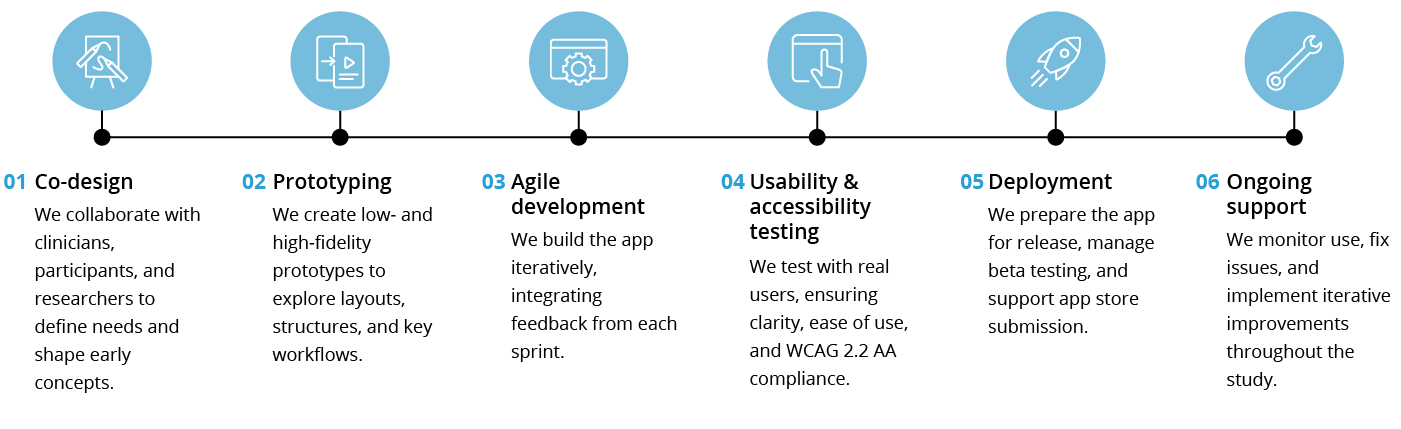
- Co-design apps in collaboration with patients, clinicians, and researchers, ensuring tools reflect real-world needs and context.
- Design apps that support research interventions, helping participants follow structured programmes or activities.
- Create tools for symptom monitoring and adherence tracking, enabling participants to record diaries, complete tasks, or report outcomes.
-
Implement secure data capture and storage, aligned with university and NHS information governance standards.
- Integrate with researcher-facing portals or dashboards when studies require clinician or researcher oversight.
- Ensure apps are accessible and tested with diverse users, including those with physical and cognitive disabilities.
Our process
Outcomes
- Web apps designed around the needs of both participants and clinicians.
- Secure integration with existing NHS and research systems.
- Enhanced participant engagement and richer study data.
- Applications designed and tested for accessibility, meeting WCAG 2.2 AA standards.
In action
We brought this to life in the VoiceIn project, where we created a cross-platform mobile app to make it easier for members of the public to discuss and help shape health research. Participants could browse live studies, provide feedback directly to researchers, and receive recognition for their contributions through digital certificates. The app was designed and tested for accessibility, meeting WCAG 2.2 AA standards and tested with users with a range of disabilities.
