UI/UX design
We design intuitive, inclusive, and research-informed digital health experiences.

By combining rapid prototyping with ongoing feedback from patients, clinicians, and researchers, we create interfaces that are visually engaging, clinically robust and accessible.
We use industry-standard design tools including Figma, Adobe XD, and Marvel to create and iterate prototypes. Our process is embedded within agile research workflows, enabling design and user research to progress hand-in-hand. This ensures designs are tested, validated, and refined long before development begins.
What we do
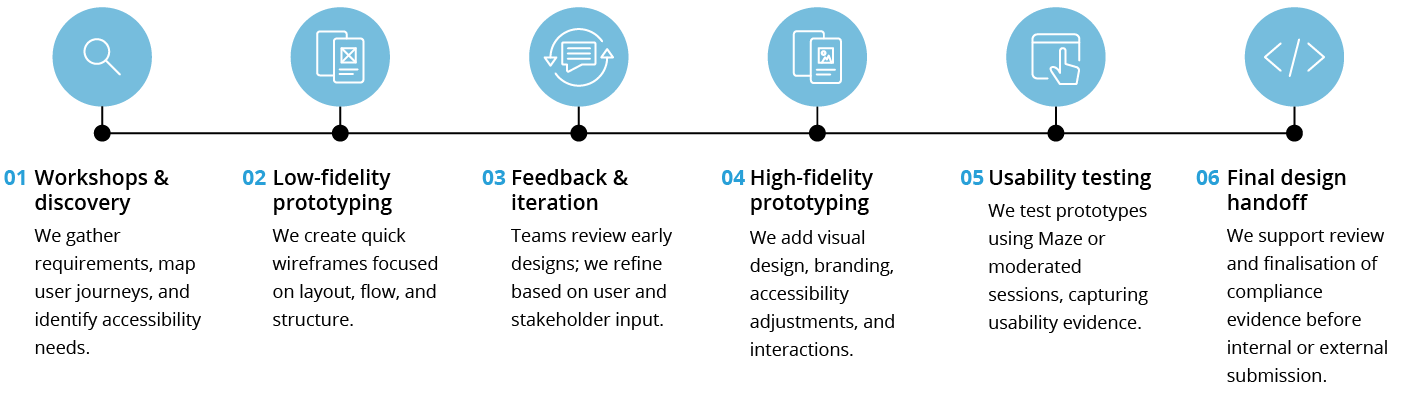
- Rapidly develop clickable prototypes, starting with low-fidelity wireframes and evolving into polished high-fidelity designs.
- Use collaborative co-design workshops and iterative feedback cycles to refine user flows and interactions.
- Run usability testing with tools like Maze, integrating participant feedback into design decisions.
- Apply human-centred design methods to balance research goals with patient and clinician needs.
- Prioritise accessibility from the outset, ensuring all designs align with WCAG 2.2 AA standards.
Our process
Outcomes
- Clear, intuitive user journeys that reduce friction for participants and clinicians.
- Designs that are informed by real-world feedback and usability testing.
- Accessible, inclusive interfaces that meet the needs of diverse user groups.
- Design systems and prototypes that accelerate development and improve consistency across projects.
In action
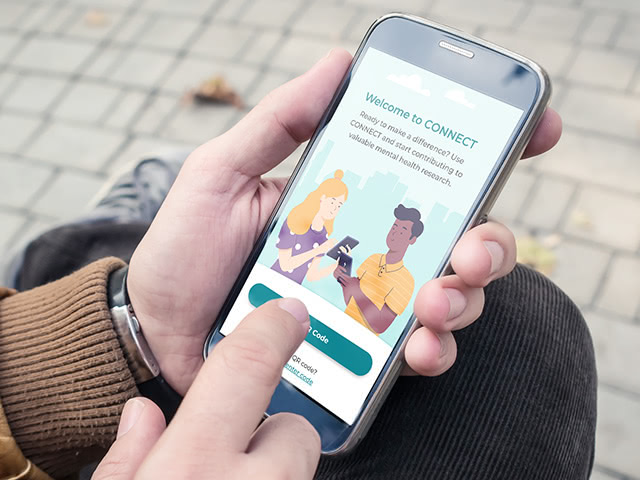
We worked with the CONNECT study team to design a mobile app that helps researchers understand links between daily activity and mental health. Through co-design workshops with the study’s Lived Experience Advisory Panel (LEAP), we identified user needs and refined the interface using rapid prototyping and usability testing.
The resulting design is engaging, easy to navigate, and WCAG 2.2 AA–compliant, helping participants stay motivated to use the app over time while ensuring accessibility and usability for a diverse audience.