
GM AI Foundry
The GM AI Foundry supported SMEs in Greater Manchester to become innovation-ready and utilise artificial technologies to develop new products and services.
Manchester Metropolitan University (MMU) was the project lead, working with The University of Manchester, the University of Salford and Lancaster University.
The project began in July 2020, and delivery ran from January 2021 to March 2023, with financial completion expected by September 2023 and output completed by 30 June 2023.
Funded by the ERDF, this project required a match contribution from The University of Manchester.
On this page:
About the project
The GM AI Foundry project aimed to support businesses in the Greater Manchester Local Enterprise Partnership (LEP) area.
It enabled businesses to exploit state-of-the-art innovation facilities, R&D assets, and academic expertise available from four leading academic institutions.
The project consisted of two phases.
Phase 1
This phase consisted of a series of workshops to ensure SMEs had the correct skills and knowledge to take a product to market.
Following this phase, companies who would benefit from a technical intervention to develop a new product or service were identified.
Phase 2
This phase provided a market analysis for the new or transformed offering and a proof-of-concept demonstrator (PoCD).
The PoCD provided evidence for further investment for the supported business. This technical development will move the supported business beyond awareness and accelerate it down the path to higher productivity.
Showcase End of Project event
The ERDF GM AI Foundry Showcase End of Project event captured the full experience of the AI Foundry programme.
Greater Manchester SMEs, the University of Manchester team and academics came together to celebrate the success of the programme.
There were presentations delivered by principal investigator Professor Magnus Rattray, project manager Effa Ettah, the research software engineering team, and representatives of two SMEs that were part of the programme from Phase 1 to Phase 2.
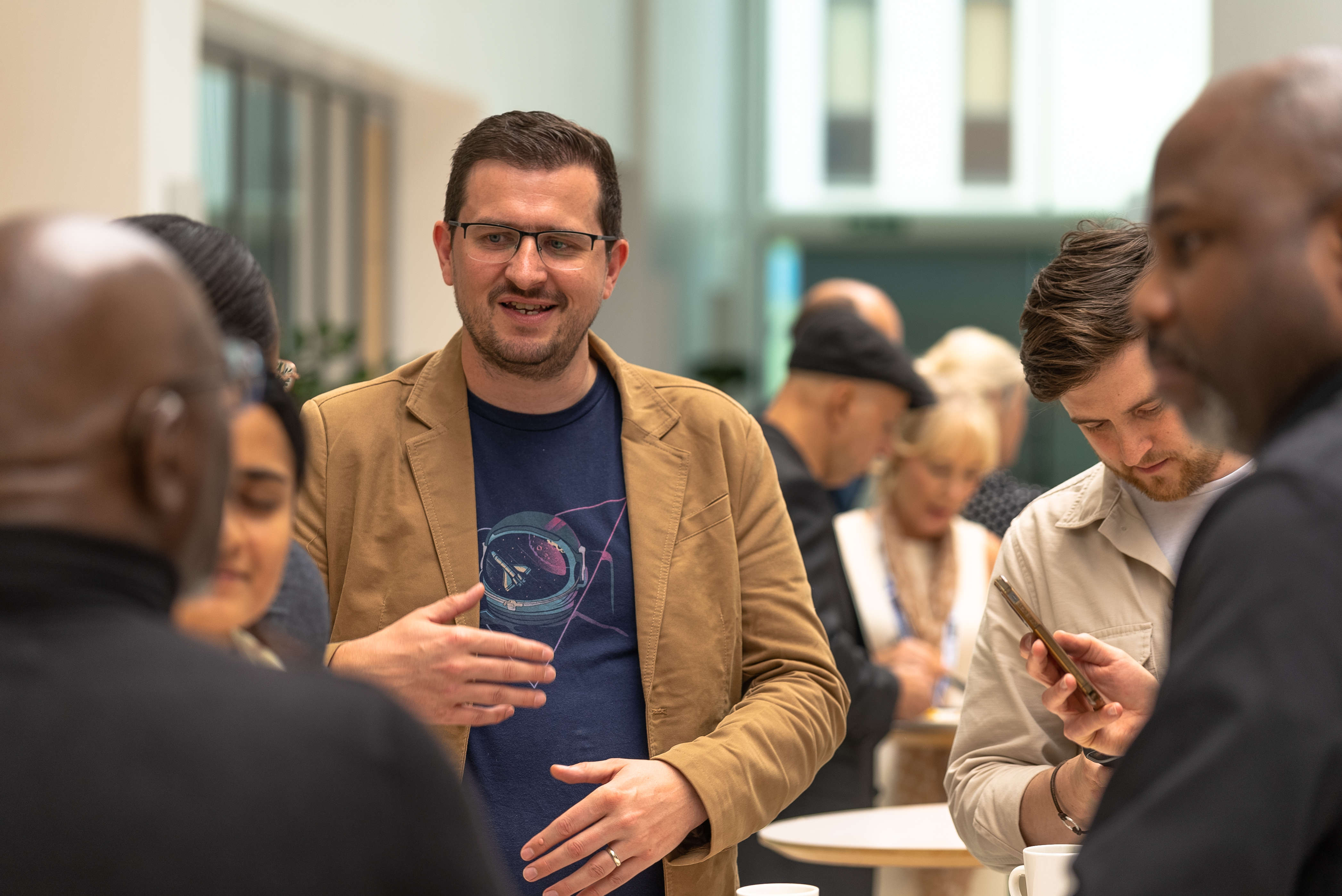
SMEs networking in the foyer.
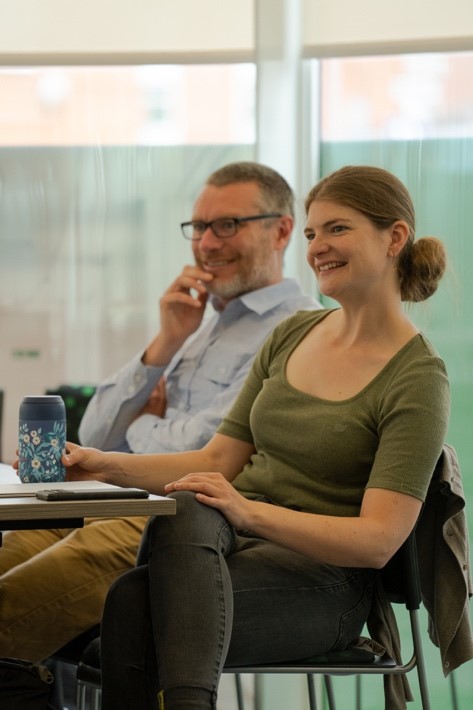
University staff seated engaged in a presentation.
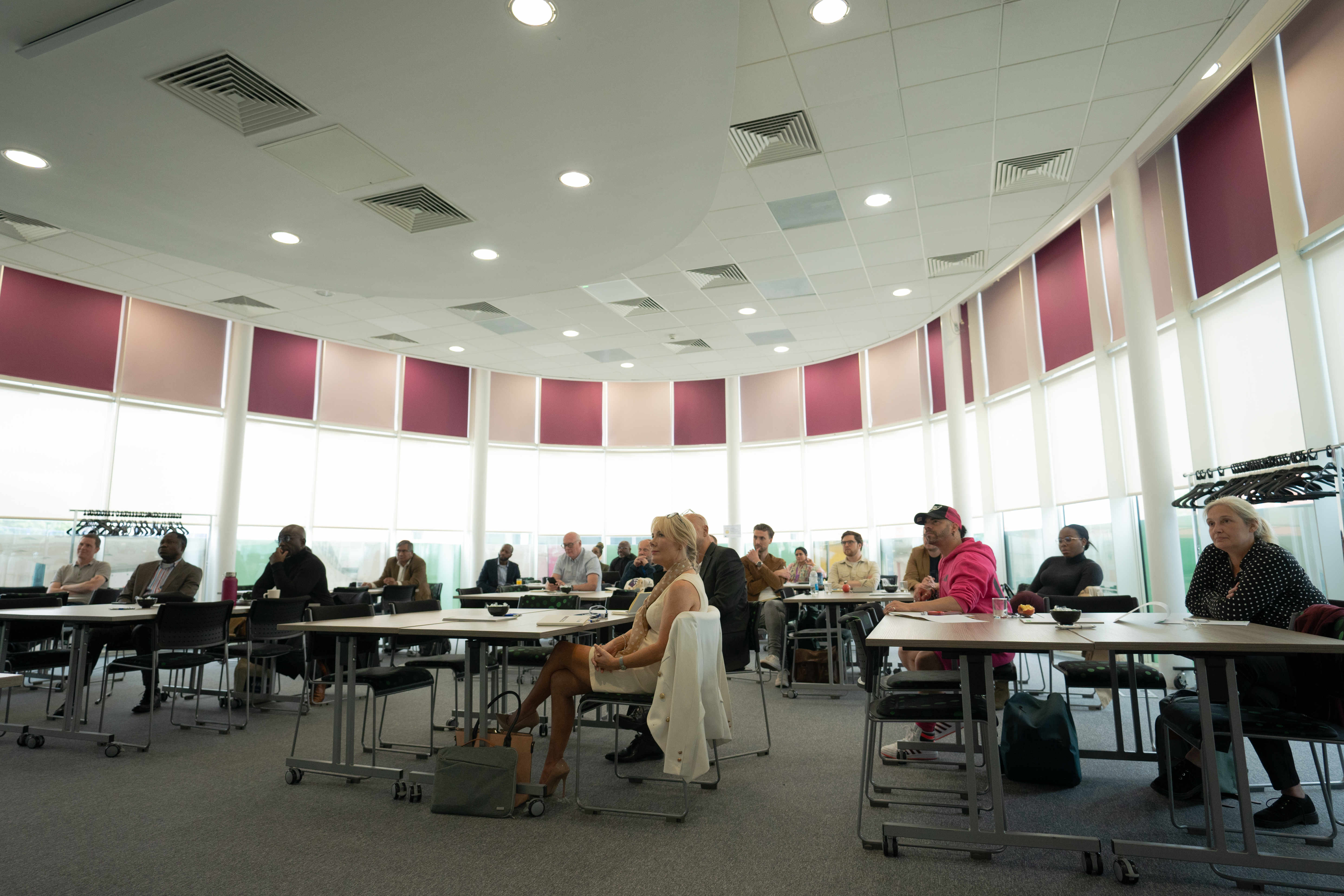
A room of academics and SMEs engaged in a presentation.
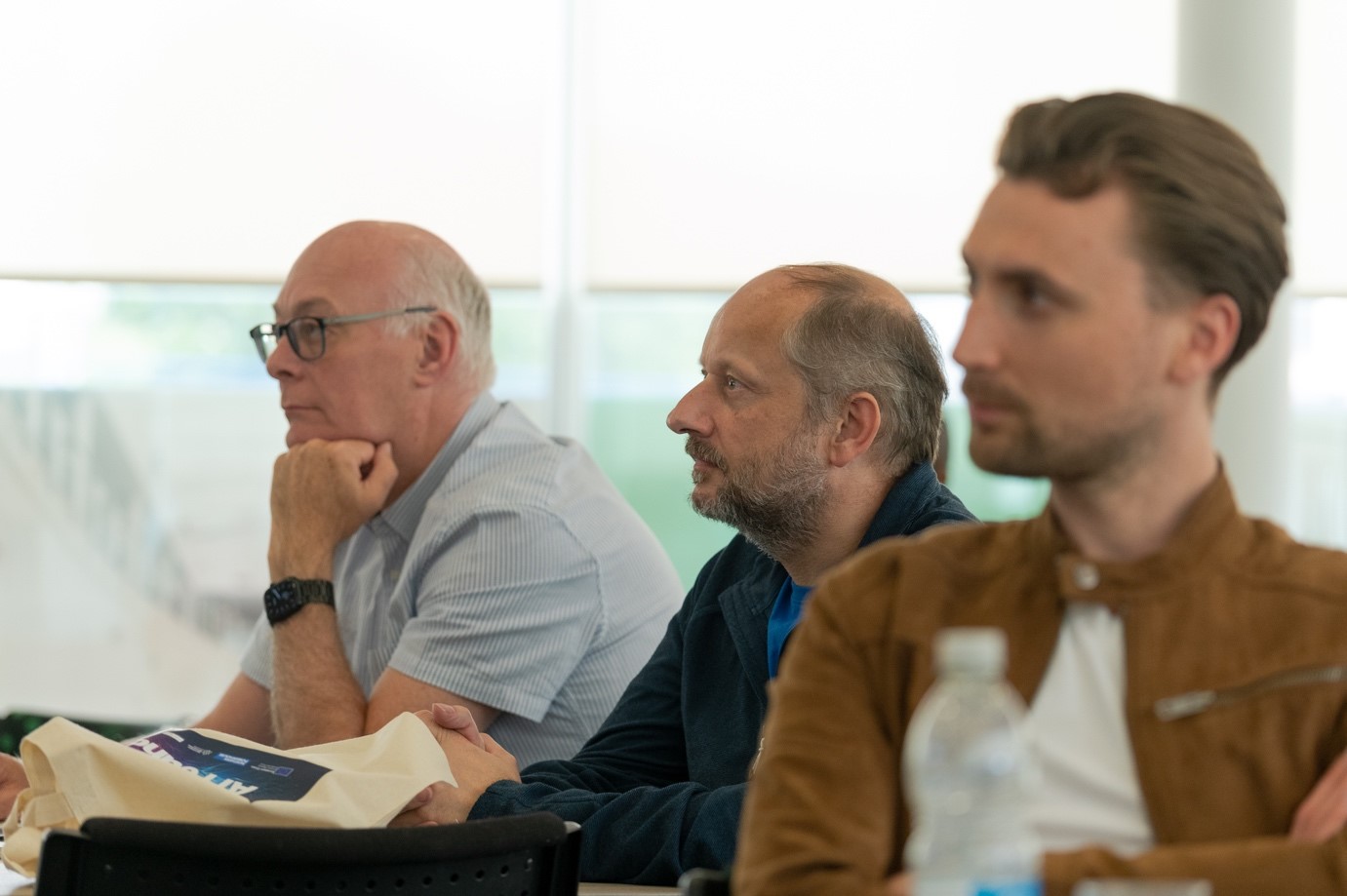
SMEs engaged with the AI Foundry content being presented.
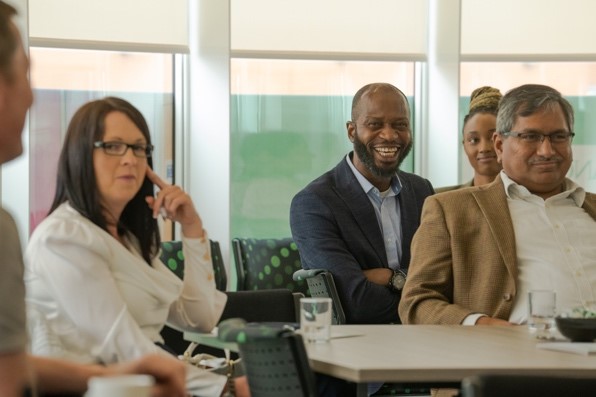
SMEs engaged in a discussion with Professor Magnus Rattray.
Outputs
The project aimed to achieve a number of outputs throughout its duration.
Targeted outputs for the project were:
- the number of enterprises receiving non-financial support;
- the number of new enterprises supported;
- employment increase in supported enterprises;
- the number of enterprises cooperating with research entities;
- the number of enterprises supported to introduce new-to-the-market products;
- the number of enterprises supported to introduce new-to-the-firm products.
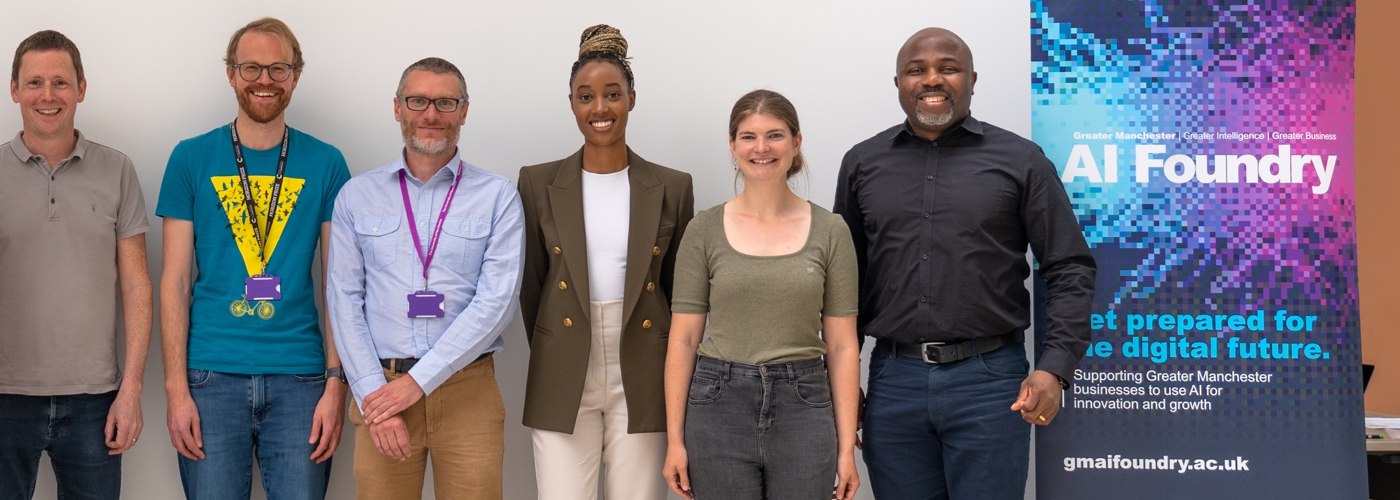
Meet the team
The GM AI Foundry project drew on partners’ existing technical expertise, and recruited additional support to establish an expert project management team.
Professor Magnus Rattray (Principal Investigator)
 Professor Magnus Rattray is Professor of Computational & Systems Biology and Director of the Institute for Data Science & Artificial Intelligence at The University of Manchester.
Magnus is a co-president of the Machine Learning for Computational Systems Biology (MLCSB) COSI of the major international bioinformatics conference ISMB and is a Fellow of the European Laboratory of Learning and Intelligent Systems (ELLIS) associated with the ELLIS Health Programme.
His research group is funded by the Wellcome Trust, UKRI, CRUK, and EU.
David Mawdsley (Lead Knowledge Exchange Fellow)
David is a Research Software Engineer at The University of Manchester.
He has previously worked in academia as a postdoc, and in industry as a data scientist. He works on developing solutions to Manchester’s phase 2 interventions.
As part of the GM AI Foundry project, he helped companies across a range of domains apply new techniques to their business problems.
Emma Simpson (Knowledge Exchange Fellow)
 Emma works on the IT team at The University of Manchester as a Research Software Engineer.
Following her PhD in atmospheric science at Manchester, Emma continued to work in atmospheric science and developed a software tool for modelling cloud droplet formation in cloud chambers.
As part of the GM AI Foundry, she worked on the technical side of things to deliver SMEs’ AI projects. She learned from a diverse range of businesses and about how state-of-the-art data science techniques can be used to innovate and improve business performance.
Sarah Barton
 Sarah supports the Associate Vice President for Digital and Innovation and the Director of Sustainable Futures in developing and delivering Sustainable Futures and Digital Futures platform strategy.
She is the Strategy and Operations manager for the Research Platforms Team (Digital Futures and Sustainable Futures).
Effa Ettah
 Effa Ettah is the GM AI Foundry Project Manager at The University of Manchester.
His role incorporates stakeholder management, business engagement, and the overall running of the project at the University. Effa has worked as part of various multi-university consortiums.
Christopher Fullerton
 Christopher works as a Research Software Engineer at The University of Manchester.
Before joining the Manchester team, he worked as a researcher for Theoretical Physics and Respiratory Physiology.
His role in the AI Foundry team is to work on Phase 2 projects with SMEs, applying his technical skills to various problems and coming up with ways of explaining different AI models to non-technical audiences.
Shanice Katana
 Shanice is a Project Administrator at The University of Manchester.
She helps deliver the AI Foundry programme to Greater Manchester SMEs by providing administrative support.
Adina Rahim
Adina is a Research Software Engineer at The University of Manchester. She supports small and medium-sized enterprises (SMEs) in Greater Manchester, empowering them to leverage AI for business growth.
Adina obtained her MS degree in Software Engineering with a specialisation in deep learning. She has experience in Alexa skill development, GUI development, robotic process automation, artificial intelligence, deep learning for computer vision, text mining, and recommender systems.
Additionally, as a Python developer, she actively assists researchers in making ECGs explainable with colour, aiming to aid in the early detection of life-threatening heart conditions.
Gerard Capes
 Gerard is a Research Software Engineer at The University of Manchester.
He has been developing AI solutions to problems faced by local businesses. He has enjoyed learning new data science and machine learning techniques while assisting with very tangible problems.
Contact us
If you have any questions about the GM AI Foundry project, please get in touch.
Effa-Bassey Ettah (Project Manager)
Email: effa.ettah@manchester.ac.uk
Shanice Katana (Project Administrator)
Email: shanice.katana@manchester.ac.uk

Contact Us
+44 (0) 161 306 6000


