
Dr Holly Fletcher wins ESEH article prize for environmental history

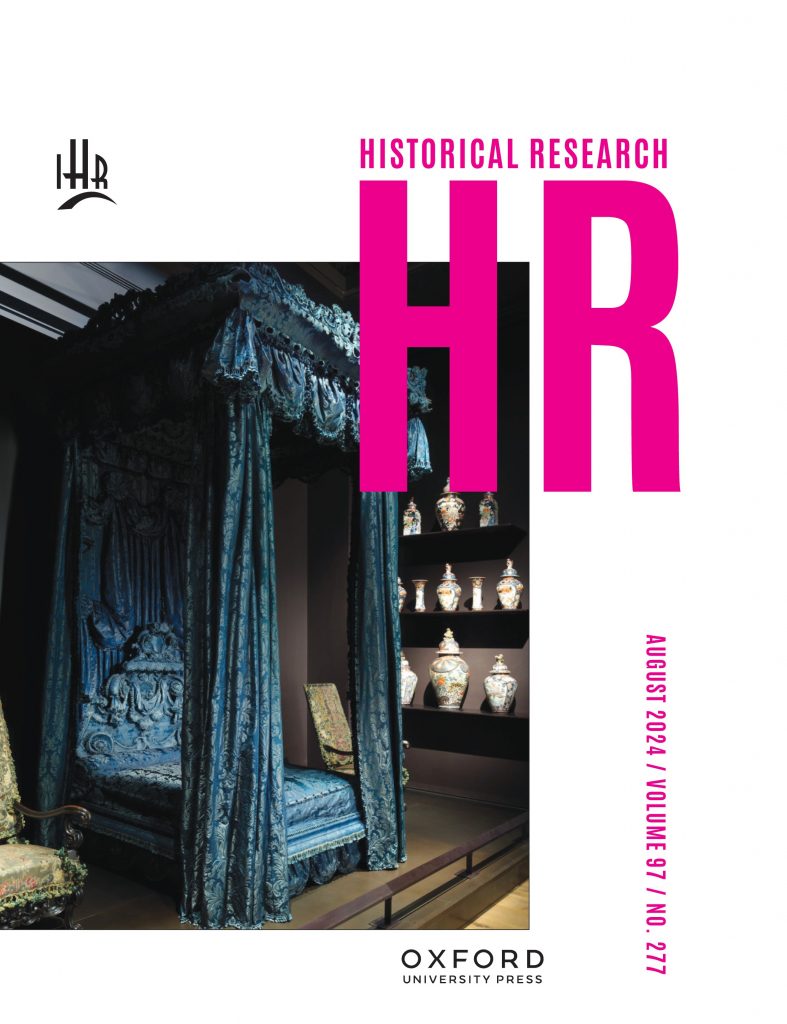
Dr Holly Fletcher has been awarded the 2025 St Andrews Article Prize by the European Society for Environmental History (ESEH) for her article ‘Making Beds in Early Modern England: Sleep Matter and Environmental Change’, published in Historical Research in 2024. The research for this article was completed as part of our project ‘Sleeping Well in the Early Modern World’ on which Holly has been a Research Associate for the past four years.
The ESEH St Andrews Prize is awarded to the best article in the field of environmental history in Europe and aims to identify and encourage innovative research. Holly’s article was selected from forty submissions which, the committee stated, demonstrated the depth and breadth of the field. The prize was awarded at the 13th biennial ESEH conference which took place in Uppsala, Sweden, 18-22 August.
The prize committee described Holly’s article as a ‘beautifully written, utterly original and deeply entertaining’ piece which presents sleep as a multispecies assemblage. They highlighted Holly’s creative use of the records of London’s Worshipful Company of Upholders to identify the myriad natural fibres with which mattresses were stuffed, as well as the medical, moral and legal discourses which surrounded such practices. They further praised the ‘complex stories about poverty, animal physiology, gender, science, folk customs, domesticity, traditional ecological knowledge and historical concepts of the body’ which the article weaves together.
Holly shares some reflections on winning the article prize below:
It was a real honour to receive the prize, and particularly gratifying since the article itself was a lot of fun to research and write – discovering the records of the Society of Upholders, where fines were issued to upholsterers who were selling beds with ‘illegal’ stuffing materials, was such a gift. These records enabled me to trace the diverse range of sleeping materials being used in early modern England, including beds filled with goat hair, rabbit fur and the fluffy seeds of thistles and bulrushes! From this starting point, I sought to show how ideas and practices concerning healthy sleep involved multispecies interactions, and place-specific material and ecological knowledge. It was wonderful to hear that the judges appreciated the bigger, multilayered story that I aimed to tell. I think it’s also encouraging that this study – which interweaves environmental history with histories of health and the body, material culture, poverty and gender – has been rewarded, pointing to the broader and more integrated field that environmental history can be. Finally, it’s a wonderful way to mark the end of my time on the ‘Sleeping Well’ project and to recognise the contribution that this project has made to early modern histories of health and environment.
The Sleeping Well research team (Prof. Sasha Handley, Dr Holly Fletcher, Dr Abigail Greenall & Lucy Elliott) travelled to Uppsala for the ESEH conference where they presented their panel ‘Sleep, Environments and Healthcare in Early Modern Britain, Ireland and Early America’.
Following the completion of the ‘Sleeping Well’ project, in October 2025 Holly will take up a Wellcome Trust Early Career Award at University College London for her project ‘The Fats of Life in the Early Modern World, 1500-1750: Matter in Multispecies Medicine’.




0 Comments