

Beyond Diagnosis: NF1 Community Festival
Dr Yuping Yang of the Studying Plasticity in Neurodevelopment (SPiN) Lab talks about the Beyond Diagnosis: NF1 Community Festival to raise awareness of and explore experiences of neurofibromatosis type 1 (NF1).
Neurofibromatosis Type 1 (NF1) is a genetic condition that causes tumours to grow on nerve endings. It can affect the nervous system in multiple ways. Children living with NF1 often face a range of neurological and developmental challenges, including learning difficulties that can significantly affect education, wellbeing and quality of life. While a lot of progress has been made in NF1-related research, more work is still needed to understand why these difficulties happen and how best to support those affected.
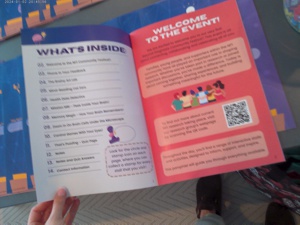
Every May, NF1 Awareness Month helps raise global awareness and visibility of this neurogenetic condition. This year, to help increase knowledge and understanding of NF1, researchers from the SPiN lab at the University of Manchester brought together families, children, young people and supporters from the NF1 community for the Beyond Diagnosis: NF1 Community Festival. The festival was built around the experiences and perspectives of people living with NF1 and their families, creating a space for sharing, learning and exploring research that reflects real lived experiences.
A day of connecting, learning, and exploring
The day was designed to be welcoming and engaging for everyone, with a range of hands-on activities and interactive stalls that brought research to life in a fun and accessible way.
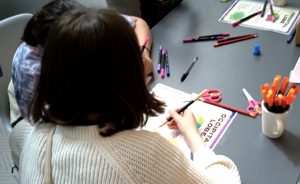
One of the first activities visitors experienced was the “Brainy Art Lab,” where children and families worked together to create a large collaborative brain artwork. Participants decorated different regions of the brain while learning about the frontal, parietal, temporal and occipital lobes. This activity introduced how different parts of the brain support functions such as thinking, memory, language, movement and vision.
The next activity visitors explored was the “Mind Reading Cat Ears” stall, where they learned how EEG inspired equipment can be used to “listen to” brain activity. By wearing interactive cat ears connected to simple sensors, children completed puzzles and games while watching how the ears responded to changes in brain electrical signals linked to concentration and relaxation. This provided a playful introduction to how researchers use neuroimaging techniques to capture neural activity in the brain.
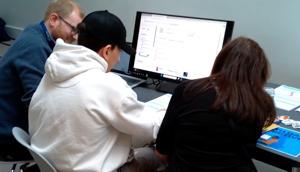 Visitors also became “Health Data Detectives”, learning how anonymised NHS health data can be used in research to study medical conditions, treatments and health outcomes. Through quiz games, participants explored how anonymised health records from millions of people can be securely accessed by authorised researchers and used to improve understanding of both physical and mental health.
In addition, the festival included a physically interactive activity focused on working memory. At the “Memory Magic & Brain Messengers” stall, children explored working memory through dancing mat games that demonstrated how brain cells communicate using “GO” and “STOP” signals, helping them to experience the balance between the two. This activity made complex neuroscience concepts such as excitation and inhibition easier to understand in a fun and engaging way.
Another popular activity was “Mission MRI: Peek Inside Your Brain”, where visitors learned how MRI scans are used in neuroscience research. Researchers explained how an MRI machine uses a magnetic field to detect hydrogen atoms in the body and measure the signals they send back. They also described how different MRI methods, including structural, functional and diffusion imaging sequences, can each provide different information about the brain.
At the “Functional Neuroanatomy” stall, visitors had the chance to explore realistic brain models and see what the brain looks like. Through these 3D models, they were able to look not only at the outside of the brain, but also at how different brain regions fit together inside. They also learned how brain structure and function work together to support everyday activities, including attention, memory and information processing.
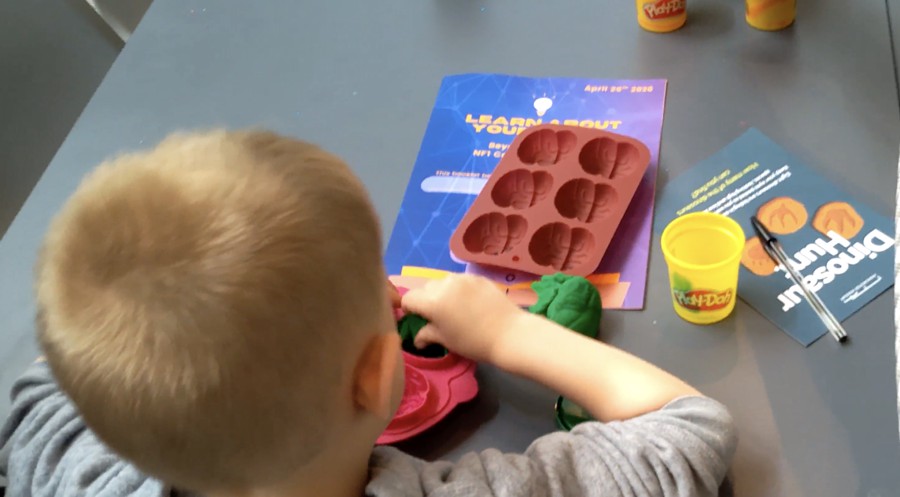
Meanwhile, the “Zoom in on Brain Cells” activity gave visitors the chance to look at brain tissue and laboratory grown samples under the microscope. Visitors learned about the neurons and supporting cells that make up the brain. They were also introduced to brain organoids, which are simplified versions of brain tissue grown in the laboratory from groups of human cells. Researchers also explained how blood cells can be turned into stem cells in the lab, which can then develop into many different types of cells, including brain cells.
At the “Control Games with Your Eyes” stall, visitors enjoyed playing games controlled by their eye movements using eye tracking technology. They learned how a small camera and safe infrared light can detect where they are looking on a screen and measure changes in pupil size. Through this, visitors were introduced to how eye movements are linked to brain activity and neurotransmitters, and how researchers can use this information to better understand attention and thinking.
Alongside these scientific activities, the festival also placed a strong focus on listening to the NF1 community. At the “Phone in Your Feedback” stall, visitors were invited to share their thoughts, experiences and ideas for future research and events through recorded voice messages and feedback forms. Many took the opportunity to reflect on what NF1 means to them, what they experienced at the event, and what kinds of research or support they would like to see in the future.
Impact and the importance of PPIE
Good health research works best when the people it affects are part of the process. This is the idea behind patient and public involvement and engagement (PPIE). It is not only about sharing research with families, but about working with them as partners who help shape what is studied, how it is studied, and how results are shared.
The Beyond Diagnosis: NF1 Community Festival highlighted the value of bringing research out of the lab and into a shared space where families, children, young people and researchers can learn from one another. By combining interactive activities with open discussion, the event made complex neuroscience and NF1 research more accessible, while also opening up space for meaningful conversations about lived experience. It provided an environment for honest feedback and expression, reflecting a key aim of the festival: ensuring that people with lived experience of NF1 are not only heard, but are central to shaping research priorities and future directions.
 The importance of this approach was reflected by those involved in organising the event. Karen Cockburn, Charity Director of Nerve Tumours UK, said “It was such a lovely, brilliantly thought through, family event. I was delighted to see so many people there.”
Dr Shruti Garg, Senior Lecturer at The University of Manchester, said “We are really thankful for the children, young people and families who took part in our event. We really wanted to learn a lot from them but also to share what we are doing, so that we can ensure our research reflect the priorities of the NF1 community.”
Feedback from participants further highlighted the value of the festival, with responses including “We loved meeting the people behind the research and the charities,” “It helps to raise awareness and feel that there are people out there to support,” and “The SPiN Lab researchers did a great job, they were all very helpful and knowledgeable.” A mother of a child with NF1 also reflected, “It’s just so good to know that NF1 is being researched for future families with children born with NF1 and hopefully will help adults with the condition in the future. Also that there are camps and events etc for children to meet others with the condition as there was nothing available like this when my daughter was growing up.”
These reflections highlight not only the importance of research, but also the value of community, visibility and shared experience. The insights gathered throughout the festival will continue to inform ongoing and future research within our team. The event also helped strengthen connections within the NF1 community and created a space where participants felt heard, included and valued.
Ultimately, Beyond Diagnosis reflects our commitment to building research together with the NF1 community, not just for it. By continuing to develop strong partnerships with families, children and young people, we hope to ensure that our NF1 research is shaped by lived experience, driven by shared priorities, and dedicated to improving quality of life for those affected.
More information
- SPiN Lab
- NF1 Research Team – Email: nfresearch@manchester.ac.uk
Related
Contact Us
Email: sofia.ahmed@manchester.ac.uk


0 Comments