
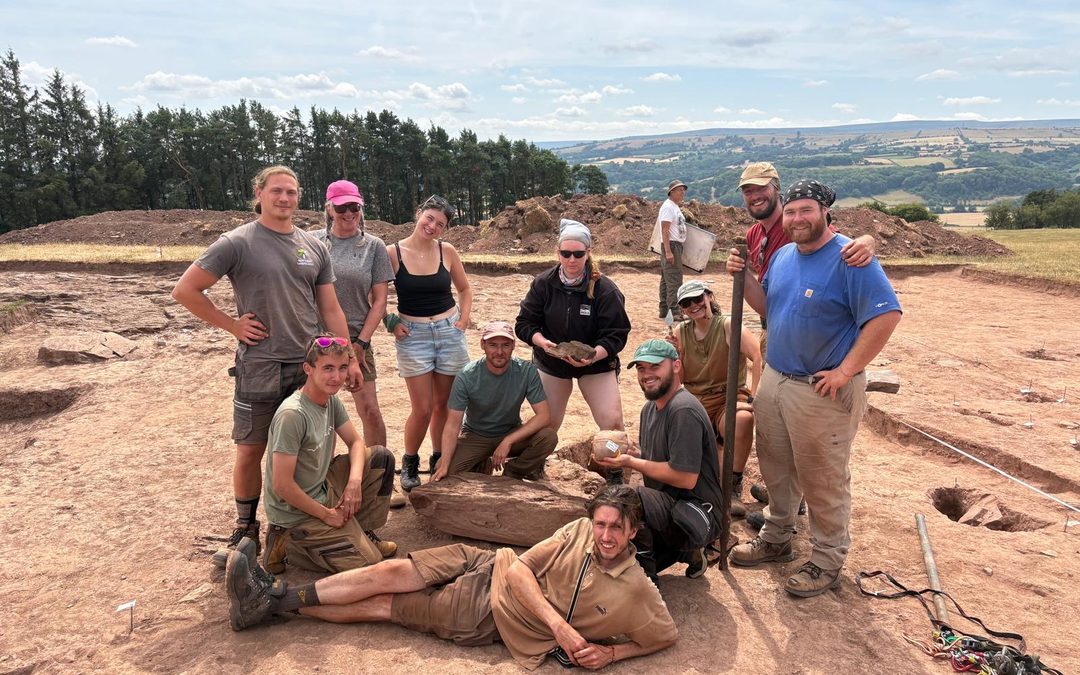
My very first professor of archaeology once told me that the simplest definition of archaeology is “the study of people through their things”. Sometimes it seems that it can be easy to get so caught up in the “things” aspect of archaeology, that we can lose sight of the “people” aspect of it. That is part of what is so magical about the Dorstone excavation program; the people are right at the forefront of it.
From the first days on Arthur’s Stone, it became abundantly clear that the locals were exceedingly interested in the work that we were doing. They would visit at all hours of the work day to ask questions, get updates on our progress, and watch us dig. As if one needed more proof of the community’s engagement, look no further than the robust attendance for the weekly talks in the Dorstone Village Hall held by Dr. Julian Thomas and Dr. Keith Ray.
The story of Arthur’s Stone is the story of Dorstone and all of its people, both past and present. It was obvious that our work was important to the people of Dorstone, which made it all the more important to us. Whether it was the staff, the volunteers, the University of Manchester students, or the IFR students, I think everyone could feel how special the excavation was. For a student of archaeology I can think of no better place to start than here; a place where the ‘why’ of archaeology is at its strongest and most tangible.
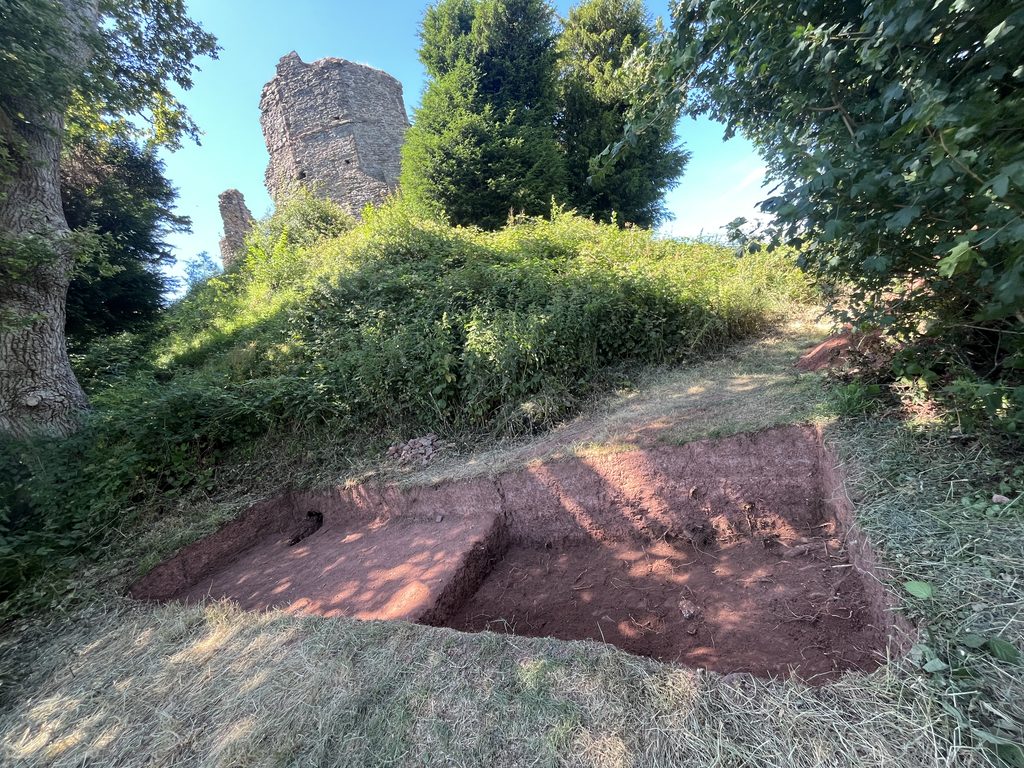
Of course, the main objective of a field school is to develop basic skills such as troweling, data recording, surveying, etcetera (all of which we did plenty, especially troweling). The six-day-a-week dig schedule gives a small taste of what it might be like to be a professional archaeologist, and provides plenty of time for students to hone these basic skills. One of the other huge benefits of the Dorstone dig is that students spend extensive time in the trenches with staff and volunteers that possess tons of experience in both the academic and commercial sectors of archaeology.
This affords students ample opportunities to get advice and insight on everything from artefact identification to general career tips. In one of our conversations, a volunteer who I had grown particularly close with told me that he “comes back [to Dorstone] every summer to fall in love with archaeology all over again”. He has been volunteering on the Dorstone dig for a few years now, taking time from his job as a commercial archaeologist to pitch a tent in a field for a couple of weeks and help out. His story is not at all uncommon; numerous volunteers take time from their commercial work to help out on the Dorstone dig every year, and it is easy to see why.
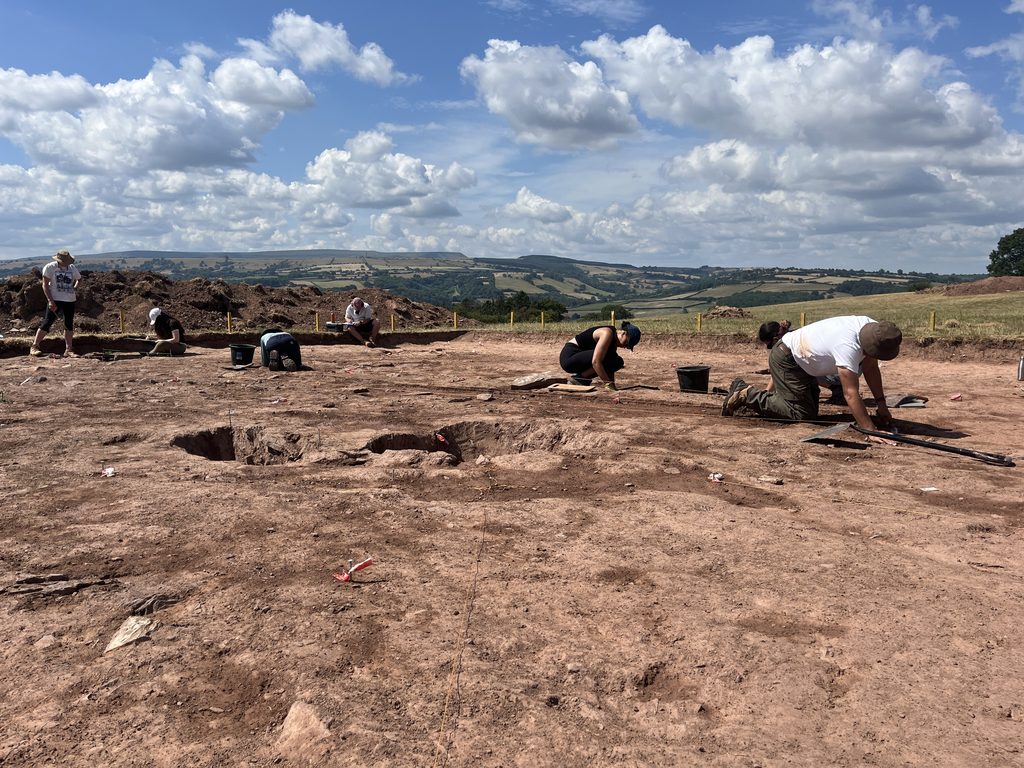
The Dorstone excavation is archaeology at its best; it is a place where students can fully immerse themselves in what it is like to be on a dig site, develop the skills and knowledge necessary for success in the industry, and experience first hand the reason that we dig: to study people through their things. The views from the trenches weren’t too bad either.
Words by Jeffrey P. Johnson, IFR Student 2026