
My psychology undergraduate placement at PRIME-RU
Jamie Bottoms is a BSc Psychology student at The University of Manchester. Here, he talks about his placement year at the Perinatal Mental Health and Parenting Research Unit (PRIME-RU) and how it has helped him to learn more about research.
I am currently on a placement year between my second and third years of study. This means that I can gain relevant and recognised work experience as part of my BSc degree.
My placement is with PRIME-RU within Greater Manchester Mental Health NHS Foundation Trust. I’m an aspiring future clinical psychologist, which is what initially motivated me to apply for this role, as I’m aware of how competitive the field is and how valuable relevant work experience is.
How I got my placement
I applied for this placement through the University’s Blackboard page as I knew it offered and supported students to find a placement year. Once I found the advertisement on Blackboard, I applied by sending off my CV and cover letter, which was followed by an interview with the PRIME-RU director and one of the unit’s research associates.
The purpose of the interview was to provide applicants with experience of what a real research assistant job interview would be like, in addition to selecting the most suitable student for the placement.
Upon completing my interview, I was offered the placement role. The option of either part-time or full-time hours was given to me, but I chose full-time as I believed this was a better reflection of and therefore a better experience of the working world.
I started my placement on 26 September 2023 and will finish on 31 July 2024. I work eight-hour days Monday to Friday, and work a blend of remotely from home and in the office (in the Rawnsley building at Manchester Royal Infirmary, or Zochonis building at the University).
Assisting on the DAWN-P study
On my placement, I have the role of honorary research assistant on the DAWN-P study at Greater Manchester Mental Health NHS Foundation Trust. This study aims to test the feasibility of using a phone app to screen pregnant women/birthing people for postnatal depression.
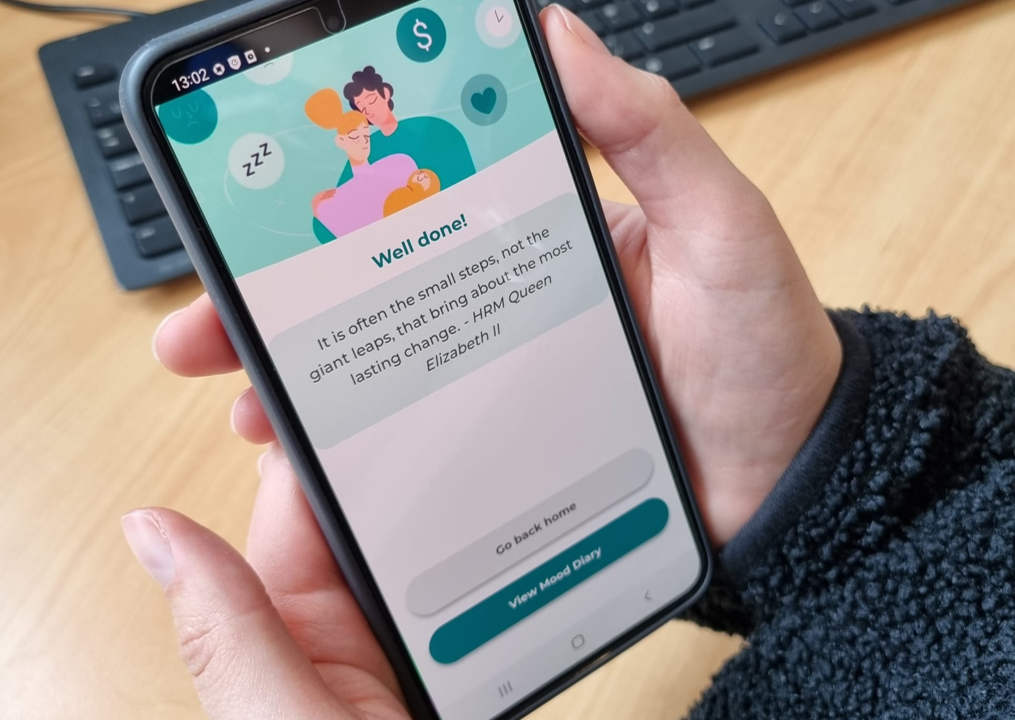
The phone app was created by a digital health company called CareLoop, and asks questions from the validated Edinburgh postnatal depression scale. Participants were randomly allocated into a control group which didn’t use the app and received usual antenatal and postnatal care from the NHS, and an app group who were asked to use the app every day from late pregnancy until their baby was 8 weeks old, as well as receiving usual care.
While being involved in the DAWN-P study, I have been entrusted with numerous tasks including collecting data through both qualitative and quantitative interviews and scales, and screening to find individuals who would be eligible for the study.
I have also been involved with creating and sending off letters to GPs, health visitors and midwives to inform them of their patients’ participation and what this will involve, as well as much more.
Working on DAWN-P’s sub-studies
Alongside my work on the primary DAWN-P study, I have been involved with sub-studies which have branched off from this trial.
This included a study testing the feasibility of partners of pregnant people using the app, and also a sub-study involving interviewing healthcare professionals to gauge their thoughts and feelings about the app.
My contributions have so far included helping with recruitment in the partners sub-study and transcribing qualitative interviews for the healthcare professionals sub-study, and much more besides.
These sub-studies were run by trainee clinical psychologists, so working alongside them has given me a great insight into what their work is like.
What I’ve got out of my placement
Working in all these capacities has given me a glimpse into the inner workings of research, which has been very interesting considering how much research I have explored at undergraduate level.
I would encourage every student to at least look into doing a placement year, as it provides an insight into the real world beyond education, and provides invaluable experience to make you stand out from the crowd upon your graduation.
I also believe that this placement year has given me respite between my second and third years of study, which has been very helpful, as I feel I have developed new skills that will be useful for my final year of study, as well enabling me to feel refreshed and excited to get started.
Contact Us
Email: prime@gmmh.nhs.uk
Tel: 0161 271 0028

0 Comments