
Rising Temperatures and Rising Inequality: Why climate change impacts women more than men
Article by Alexandra Pressdee
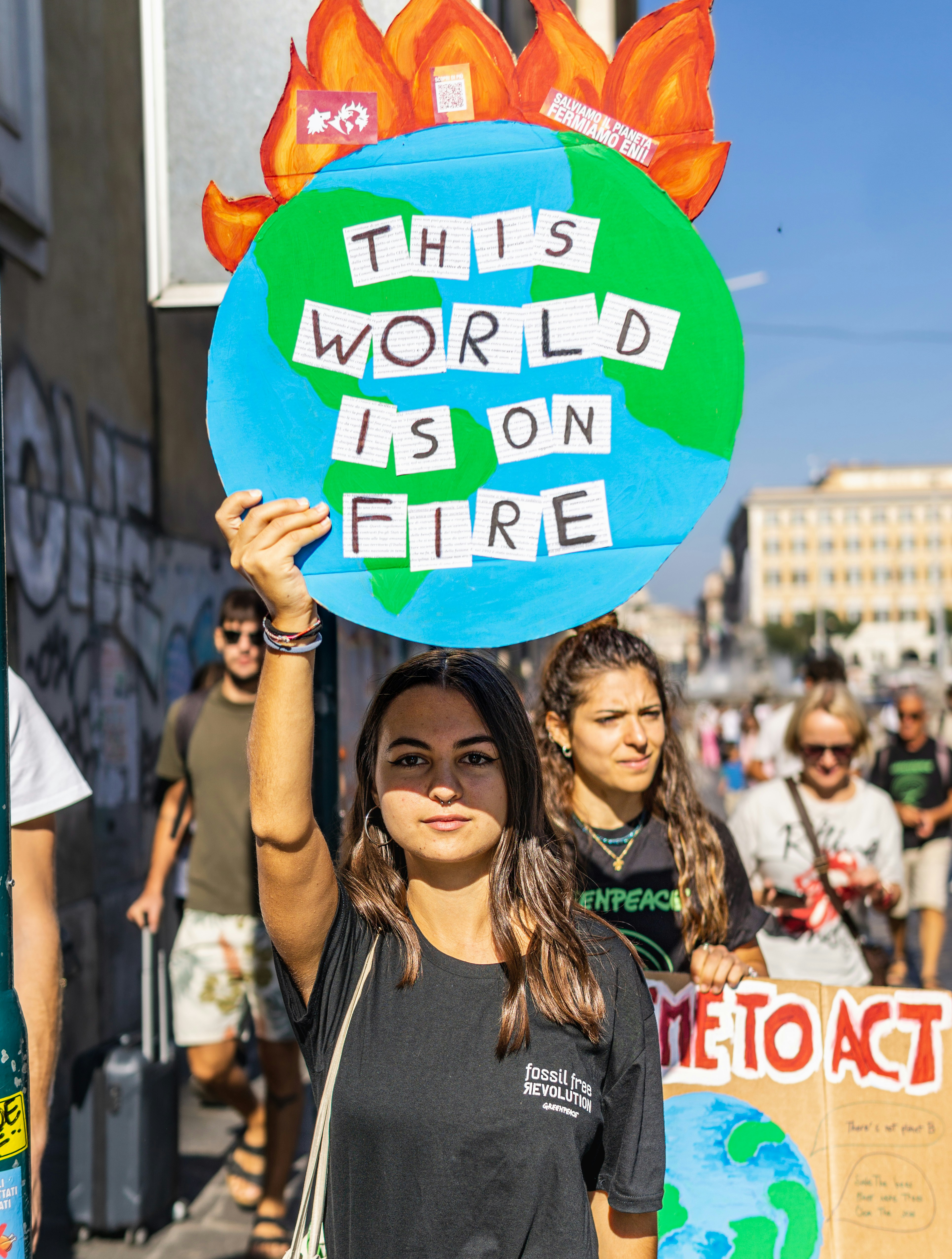
Photo by Leonardo Basso on Unsplash
Everybody knows that climate change is an issue. The conversation is neverending, and we hear more and more everyday about how the human species is under threat of extinction. From ecosystems to economies, the effects of climate change reach every part of human life. But somehow the topic of gender always falls out of this conversation, and nobody recognises how this global issue disproportionately affects women. But why? Why is it that climate change exacerbates gender inequalities? And why are women so much more vulnerable to the physical effects of global warming?
Climate change intensifies existing gender inequalities by presenting unique threats to the livelihoods, safety, and health of women and girls around the world. Women in low income countries encounter a range of challenges in everyday life including poverty, limited access to education, and limited political power, these are all exacerbated by the impacts of global warming. As resources become scarcer and the environment becomes increasingly barren, women are increasingly pressured and become more vulnerable thus making it more and more important to recognise and address the gendered dimensions of this global crisis.
Women are linked linguistically to nature through expressions such as ‘mother earth’, ‘fertile soil’, and ‘virgin timber’. These are more than just descriptive phrases, they assign feminine connotations and qualities to the environment whilst placing women in a position of objectification. This language subtly reinforces the subordination of both nature and women to male dominance, thus sustaining gender hierarchies and environmental exploitation under the elitist capitalist patriarchy that exists within our world.
The link between environmental and gender issues has been recognized for decades, with ecofeminists like Vandana Shiva and Karen Warren working tirelessly to highlight this connection. They challenge the capitalist patriarchy – a system of environmental destruction and the silencing and control of women. Their advocacy strives to bring greater awareness to these intertwined issues, urging society to confront and dismantle the structures that harm both women and the environment. In her 2014 book Ecofeminism co-written with German sociologist Maria Mies, Shiva argues that the ‘marginalisation of women and the destruction of biodiversity go hand in hand’, encouraging people to examine how ‘the violence of unjust, non-sustainable economic systems and the growing frequency and brutality of violence against women’.
The intersection of economic status and gender creates an exhausting and oppressive lifestyle for many women in low and lower middle income countries. Women shoulder a disproportionate responsibility of securing food, water and fuel especially in regions facing water scarcity – a crisis of course worsened by climate change. According to UNICEF, women and girls are single handedly responsible for retrieving water in 80% of households that require water collection showing the unequal workload. Rising global temperatures lead to more frequent and severe droughts, forcing some women and girls in some rural areas to spend up to 6 hours a day collecting water according to United Nation estimations. This demanding task not only hinders female access to education but also limits opportunities for paid work and social mobility as they are occupied with housework.
Climate change acts as a ‘threat multiplier’, intensifying social, political, and economic tensions, especially in fragile and conflict-prone regions usually found in less developed countries. It fuels and exacerbates conflicts, placing women and girls at a heightened risk of gender-based violence, including conflict-related sexual violence, human trafficking, and child marriage.
In a world where women already face misogyny, violence, and abuse, how can we stand by and allow climate change to add an even greater burden to their lives? Rather than progressing toward global equality, we seem to be falling backward, with the shifting climate amplifying inequalities and enabling new forms of control and dominance over women.
In the face of natural disasters and climatic hazards you would think that men and women have an equal chance of survival, but they do not. Women and children are actually 14 times more likely to die than men in a disaster, and furthermore, women are more likely to be injured due to disparities in information, mobility, decision making, access to resources, and training. Additionally, in the aftermath, women face barriers to accessing relief and assistance. For instance, during the 2004 Indian Ocean Tsunami, 70% of the 230,000 lives lost were women.
This is clear evidence that climate change disproportionately affects women compared to men. So why is there so little action to address this? And why must women endure not only societal oppression but also the burdens caused by the environmental crisis?
References:
Mies, Maria and Shiva, Vandana. Ecofeminism. London, Zed Books Ltd, 2014.
Okai, Asako. “Women Are Hit Hardest in Disasters, so Why Are Responses Too Often Gender-Blind?
| United Nations Development Programme.” UNDP, 24 Mar. 2022, www.undp.org/blog/women-are-hit-hardest-disasters-so-why-are-responses-too-often-gender-blind.
Thompson, Ashley. “5 Ways Climate Change Disproportionately Impacts Women | Expert Analysis %.” TechnoServe, 16 May 2023, www.technoserve.org/blog/5-climate-change-impacts-women/.
UN Women. “Explainer: How Gender Inequality and Climate Change Are Interconnected.” UN Women, UN Women, 28 Feb. 2022, www.unwomen.org/en/news-stories/explainer/2022/02/explainer-how-gender-inequality-and-climatechange-are-interconnected.
Contact us
+44 (0) 161 306 6000


0 Comments