
Is anti-gender politics really protecting our children- or is it a myth?
Article by Lucy Jones
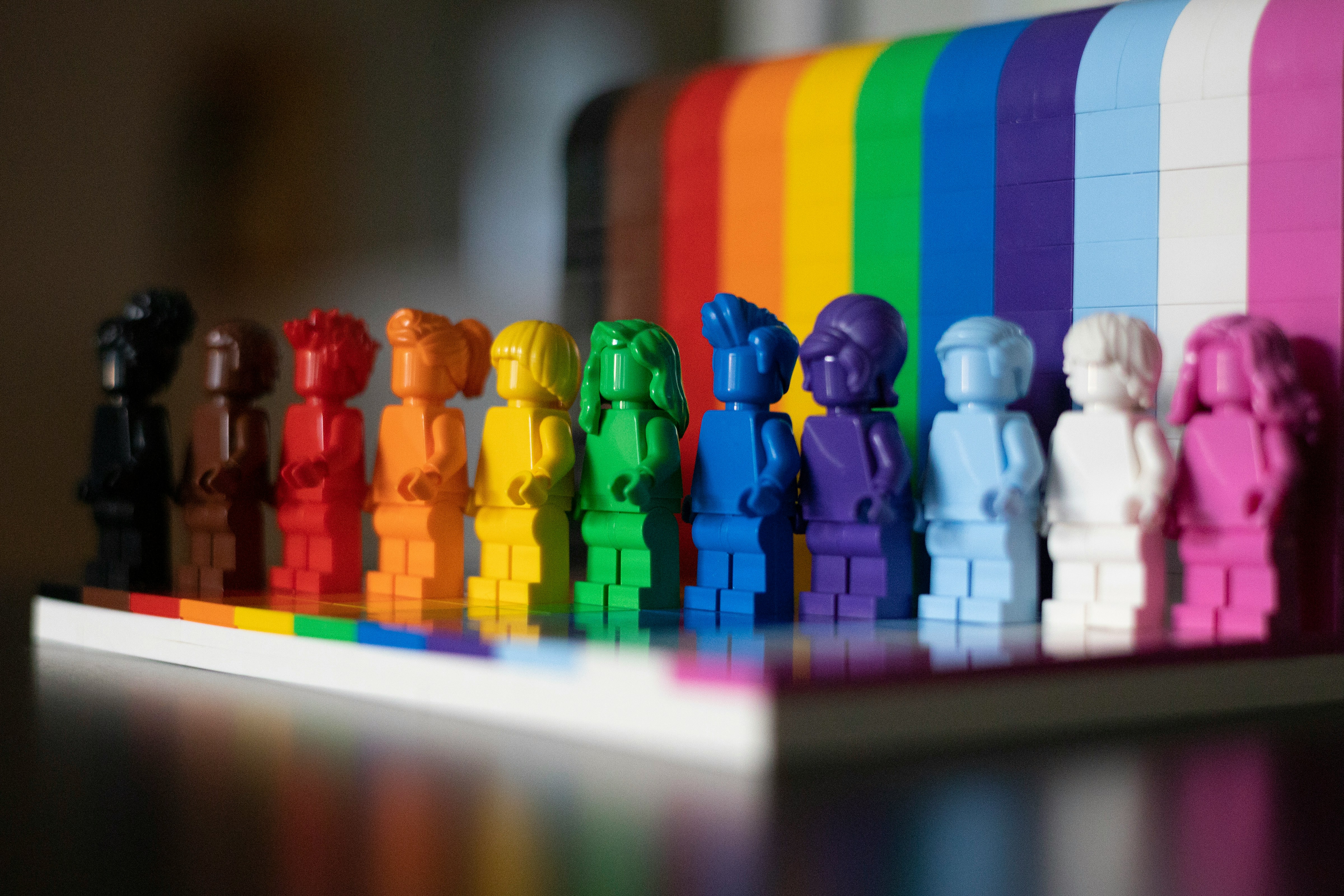
Photo by James A. Molnar on Unsplash
It could be thought that anti-gender politics protects children through preventing potential bullying within schools and supporting the traditional family ( argued by some sociologists as the most secure, stable family); these groups tend to be neoliberal and elevate the traditional nuclear family, promoting that it retains its dominance, believing that gender studies threaten the traditional family.
However, I suggest that it harms children and the LGBT society, not protecting children but protecting the ideology of the traditional family.
I believe that it is a myth that children are in danger through awareness of the concept of gender and sexuality; in reality it educates children.
Society attempts to protect children from being indoctrinated by the ideology of gender and sexuality. However, this can have an opposing effect, in that the removal of teachings and the talkings of this can create fear and distort societal reality. This can generate anxieties within individuals and produce societal upheaval and a moral panic, regarding the notion of gender and sexuality.
Historically, antigender politics’ attempt to protect children has been embedded within society, as demonstrated within the Thatcher government, in the 80s; an early form of gender politics within the UK. The production of ‘Section 28’ insisted that schools would not conduct the teachings of homosexuality, restricting children’s education and knowledge, whilst also helping normalize the teaching of sexuality and gender as dangerous.
This has continued more into the present, through anti gender campaigns, within a range of countries. Linking to the Thatcher government, in 2017, the Supreme Court of Justice in Peru ruled that including ‘gender ideology’ in school curricula is illegal as it violates parental rights to decide about their children’s upbringing (Correa, Paternotte and Kuhar 2018). This has occurred in a wider context too; one example is that Poland conducted an anti-LGBT campaign and, as of April 2020, more than 80 Polish local governments had proclaimed themselves to be LGBT free zones under the illusion that ‘LGBT ideology’ is a threat to children and families ( Agnieszka Graff and Elzbieta Korolczuk, 2022). This demonstrates that children are segregated from knowledge of sexuality and gender, removing that potential education, normalising sexuality and gender as harmful; this has to change.
I believe that antigender groups are out of touch within the realities of their politics and the potential damage that they can cause. One example for this is that these political viewpoints, actually, further marginalise LGBTQ students and members of the community, from society. This creates anomie (alienation) within society, demonising LGBTQ individuals, which can lead to crime and other reckless behaviour, creating a society lacking solidarity. This has longitudinally been the case as demonstrated within the 1980s, during the AIDS epidemic in which gay members of the community were blamed for the spreading of AIDS, leading the media and society to label the disease ‘ the gay plague’, stigmatising and marginalising the LGBTQ (Erin Ruel and Richard T.Campell, 2006). This does not protect children, nor the community but instead stigmatises and discriminates, leading children to be both wary and uneducated regarding LGBT.
Similarly, the production of anti gender politics can be thought to adversely affect children and their education, as this drives government focus away from more serious issues, within society, which have pressing, negative effects on the quality of children’s education. One example of this is poverty (preventing some children facing material deprivation from being able to obtain a strong equal education to others surrounding them), with statistics provided by the department of education, in 2012, barely 1/3 of pupils eligible for FSM achieve 5 or more GCSES at Astar-C including English and maths ( Department of Education, 2012). Another example is the declining competence of state education ( as a result of being unresponsive to the needs of parents and students). The focus on protecting children from the notions of gender and sexuality, maintaining the traditional families dominance, actually can reduce the standard of their education, emphasising the question: does anti gender politics really protect our children or does it actually lead to children being unprotected and uneducated?
References:
Correa, Paternotte and Kuhar 2018- Anti-gender politics in the populist moment- agnieszka Graff and Elzbieta Korolczuk, 2022- pg 58
Anti-gender politics in the populist moment- agnieszka Graff and Elzbieta Korolczuk, 2022- pg 53
Homophobia and HIV/AIDS: attitude change in the face of an epidemic- Erin Ruel and Richard T.Campell, 2006).
Department of education, 2012 pg 5-6
Contact us
+44 (0) 161 306 6000


0 Comments