
The price of prosperity: how inequality makes everyone worse off
Article by Grace Windsor
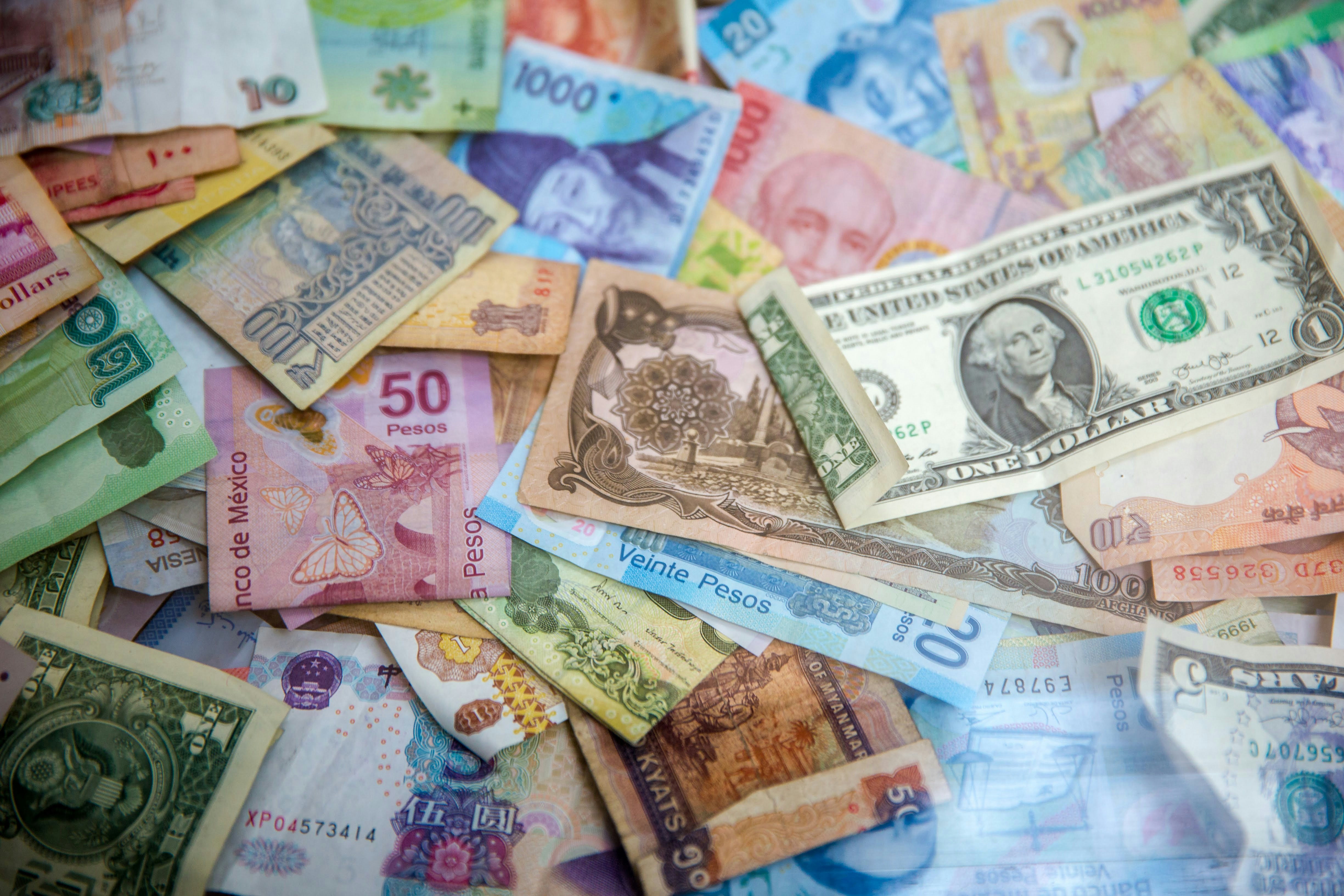
Photo by Jason Leung on Unsplash
The topic of inequality is a trend in the current world of economic news. With a seemingly black and white set of potential opinions on the subject, these perspectives tend to be based on whether macroeconomic structures that breed inequality are worth the tradeoff. But however much political controversy the word “inequality” sparks, the knock-on effects of long-term inequality within societies are yet to be fully analysed in the discussion on the ethics and pragmaticality of inequality.
Inequality does exist on the international scene, with countries like the U.S. and Singapore at the top of the chain with staggering GDP figures (World Bank, 2024); while Yemen and South Sudan at the opposite end with the majority of citizens in absolute poverty (Carnegie Endowment, 2024) (World Bank, 2024). But attention must be paid to inequality on a narrower, intranational level. Wilkinson and Pickett (2010) examine the phenomenon of sociological problems, causing dampened quality of life, being just as ubiquitous in rich nations; despite attaining sustained economic growth and globally exceptional average living standards (high GDP per capita). Their collection of internationally comparable data: measuring statistical figures including: mental illness, life expectancy, children’s educational performance, homicides, imprisonment rates and more for 20 developed nations (Wilkinson, Pickett, 2010, p.19) showcases a stark contrast in the prevalence of social problems in unequal societies as their more equal counterparts.
This observation displays that social problems arising from poverty and deprivation are more common and heightened by the more unequal a society is. These problems may not disappear upon mere economic actual growth. The sociologists claim that actually, some of the richest countries do worst against these measures, concluding that social unrest and poor quality of life are less in the hands of national economic prosperity but more in the distribution across the population of these economic gains. They argue that, with the poorest members of each sample society being most affected by these social problems, following the so-called “social gradient”, (Wilkinson, Pickett, 2010, p.24) it does not matter how rich the poorest are in comparison to the rest of the world, but how they compare to others in their own society. That is what feeds most current social dilemmas. This concept makes sense when placed into the context of simple psychology: people behave in reaction to what they can see, rather than the full bird’s eye view.
Furthermore, their data focuses on problems with widespread negative externalities for the whole of society. In other words, even though you aren’t directly associated with problems such as imprisonment, children’s educational performance, homicide or mental illness; their prevalence in the society you live in will lower your quality of life. The most apparent implications one can simply deduce from the variables in question include: crime-ridden streets, gang culture amongst the young, and financial strain upon the law enforcement institutions that are vital for the integrity of society. This round of complications in turn makes everyone in society, even the richest, worse off overall. No one is exempt from the exposure to, and consequences of such social disturbance. Both in terms of spillover, third party effects; but also, in that behaviour is copied. Action that occurs in one subgroup of society can, over time, trickle into the behaviour set of more affluent subgroups, and so on and so forth. The nature of herd behaviour prevents social activity, like the ones measured by Wilkinson and Pickett, from being exclusive to one division in the hierarchy of social class. After all, inequality is a social relation, or comparison, so the higher and lower classes in question can metaphorically see and are aware of each other, and in turn witness each other’s tendencies and behaviours. The problems that arise from inequality have a ripple effect across the whole public, reaching even the most prosperous.
This is what many rich countries miss in their efforts to be the “greatest”, most often displayed in their taxation systems. Renound economist Thomas Piketty summarises this fatal flaw in high-income nations and that instead, adopting a more progressive system would have very little impact on the overall wellbeing of the upper class and give them a “greater stake in the overall prosperity of their societies” (Peterson, 2017). A potential solvent to dilute such a current “social failure” as Wilkinson and Pickett (2010, p.18) coin it. In the end, quality of life is a multidimensional concept, and is not simply down to GDP figures, but to the way it is distributed across society, as the way it is shared compiles the human behaviour and interaction that makes up society as a whole, and whether it is a good or bad public to live in.
References:
World Bank (2024) GDP per Capita (current US$) https://data.worldbank.org/indicator/NY.GDP.PCAP.CD?end=2024&start=2024&view=map
World Bank (2024) New Report Reveals that Poverty and Vulnerability Remain Endemic in South Sudan, Despite the Country’s Abundant Resources. Press Release https://www.worldbank.org/en/news/press-release/2024/12/10/new-report-reveals-that-poverty-and-vulnerability-remain-endemic-in-afe-south-sudan
Thamer, M.A. (2024) Poverty in Yemen: Tracing the Path to Economic Downturn. Sada https://carnegieendowment.org/sada/2024/09/poverty-in-yemen-tracing-the-path-to-economic-downturn?lang=en
Wilkinson, R. G. & Pickett, K. (2010). The spirit level: why equality is better for everyone. London: Penguin. Ch. 2: Poverty or Inequality? https://contentstore.cla.co.uk/EReader/Index?guid=62f9e3ee-b9d8-e611-80c9-005056af4099&pcid=3445029&t=eyJhbGciOiJIUzI1NiIsInR5cCI6IkpXVCJ9.eyJqdGkiOiI5ZjQzNTA3My03YTE0LTQzZmUtOWMyMS05NzFhYmUwMDljZGQiLCJuYmYiOjE3NjI3MDMwNzUsImV4cCI6MTc2MjcwMzM3NSwiaWF0IjoxNzYyNzAzMDc1LCJpc3MiOiJEQ1MiLCJhdWQiOiJSZWFkZXIifQ.2DKc5gXYQXe2d7-BDMaKJoplq7BOQovoy0tRIrss0KE&b=False
Peterson, E.W. (2017) “Is Economic Inequality Really a Problem? A Review of the Arguments” Department of Agricultural Economics, University of Nebraska-Lincoln https://www.mdpi.com/2076-0760/6/4/147
Contact us
+44 (0) 161 306 6000


0 Comments