
Inequality: A reality beyond absolute poverty
Article by Jiajia Li
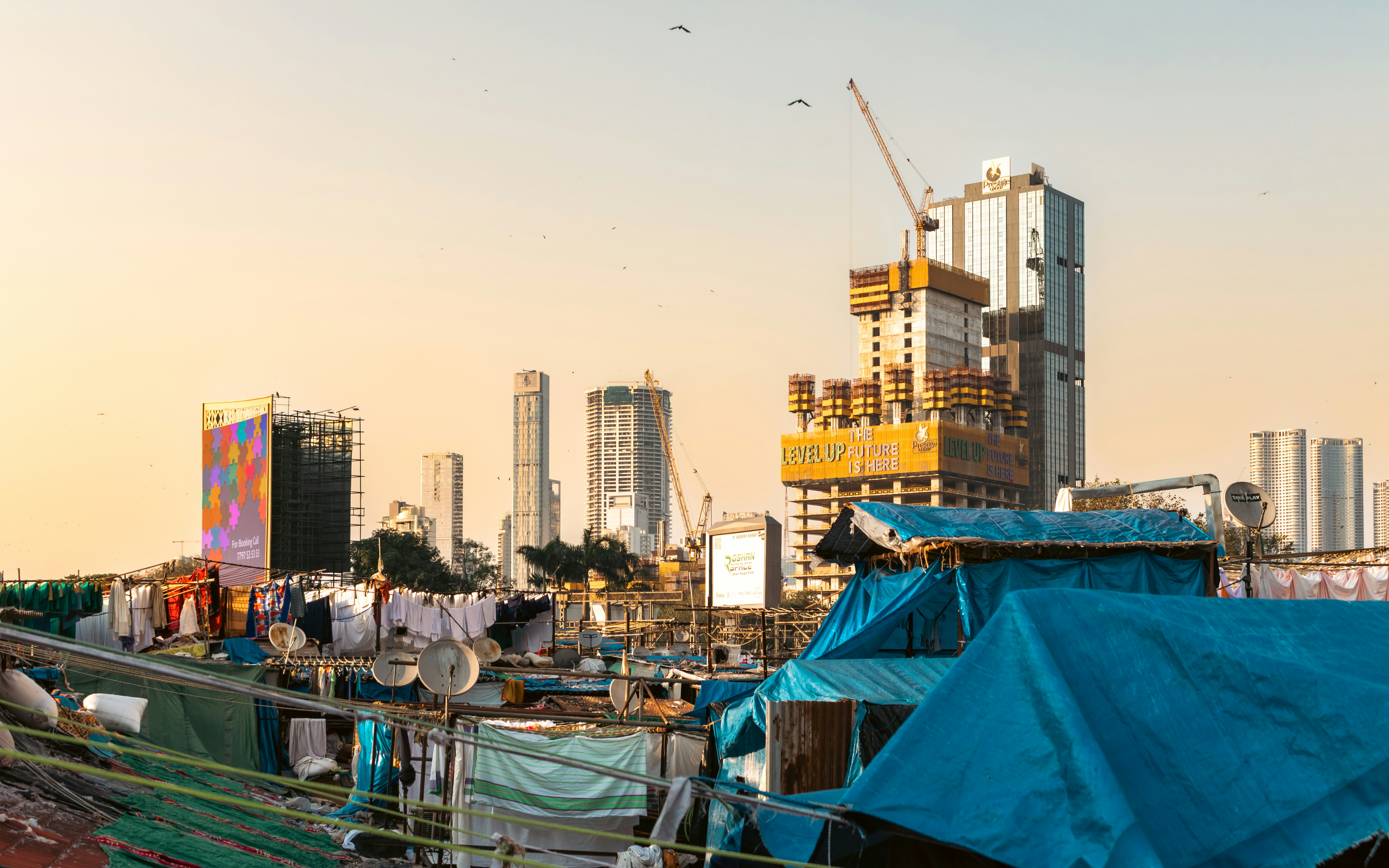
Photo by Zoshua Colah on Unsplash
Do you still remember that highly ironic rainy night in the movie “Parasite”? While the rich kids set up tents in their yards to enjoy the fun of camping, the poor have to deal with semi-basements flooded with sewage, the filth spurting from the toilets, and the embarrassment of spending the night helplessly in the gymnasium. All of this forms a sharp contrast to the peaceful days in the mansion on the mountain top. At this moment, the rich and the poor, class differences and inequality are all vividly displayed. As Sahlins said, poverty is a social status. It has grown as an invidious distinction between classes. (cited in Citer. Wilkinson, R. & Kate Pickett ,2010). The poor families in the film fully conform to this definition of poverty. They have a house to live in and a meager livelihood to make ends meet. They are by no means in absolute poverty where even basic living conditions cannot be met, but they still face poverty and injustice. The reason behind this might be exactly what we are going to explore today – it is not absolute poverty, but income inequality that has led to the problems in today’s society.
In today’s society, problems such as crime rates, mental illness and low social mobility keep emerging. Strangely enough, even in some developed countries, these problems may be even more serious. Even if the national government and society are generally prosperous and there is no need to worry about food and clothing, why do they still face such serious social problems? Study shows that health and social problems are only weakly related to national average income among rich countries. (Wilkinson & Pickett, 2010). That is to say, the root cause of these social issues may not stem from a lack of resources or absolute poverty but rather from income inequality—a gap that perpetuates systemic disparities and undermines societal well-being.
This conclusion further verifies that the core cause of contemporary social problems is not absolute poverty, but income inequality, that is, the significant differences in the distribution of material resources among social members. The key factor lies in an individual’s social status relative to others, rather than merely material deprivation. When society develops to the point where it can meet the basic material needs of all its members (such as food, clothing, housing, transportation and other necessities for survival), people often establish a series of additional social standards as an important foundation for integrating into society. Although these standards are not physically indispensable, they have had a profound impact on social interaction and cognition.
For instance, in modern society, indicators such as a person’s educational level, professional status, income level, and whether they own property and vehicles have become important dimensions for measuring their social class. These factors not only shape an individual’s relative status in society, but also largely determine whether they can maintain a decent lifestyle, which means obtain more resource allocation in society. However, when a person is at a relative disadvantage in these key indicators, such as having a lower level of education or an income level significantly lower than the social average, a sense of shame of “inferiority” may arise. This sense of shame stems from the social comparison mechanism and has triggered deep-seated negative impacts at the psychological level, thereby giving rise to many social problems, including mental health disorders, depressive moods, and even suicidal tendencies. Therefore, the root cause of social problems lies not only in the absolute scarcity of resources, but also in the imbalance of resource distribution and the sense of relative deprivation it triggers. This sense of relative deprivation is magnified through social comparison mechanisms and ultimately poses a threat to an individual’s mental health and social stability, which leading to various of social issues especially in those economic-advantaged countries with serious inequality problems.
In conclusion, the comparative mechanism constructed by society makes people pay more attention to their relative social status, which has led to a series of social problems. That is to say, the root cause of most social issues today arises from inequality instead of absolute poverty. Therefore, in contemporary society, when we analyze the causes of social problems, we should pay more attention to the issue of social inequality rather than absolute material deprivation. When the inequality between classes and incomes is improved, social problems can also be reduced.
References:
Wilkinson, R. & Kate Pickett (2010) Chapter 2: Poverty or Inequality? In: K. Pickett (ed.). The spirit level: why equality is better for everyone. Rev. ed. London, Penguin. pp. 15–30.
Contact us
+44 (0) 161 306 6000


0 Comments