
Problem population: The rich or the poor?
Article by Theo Ross
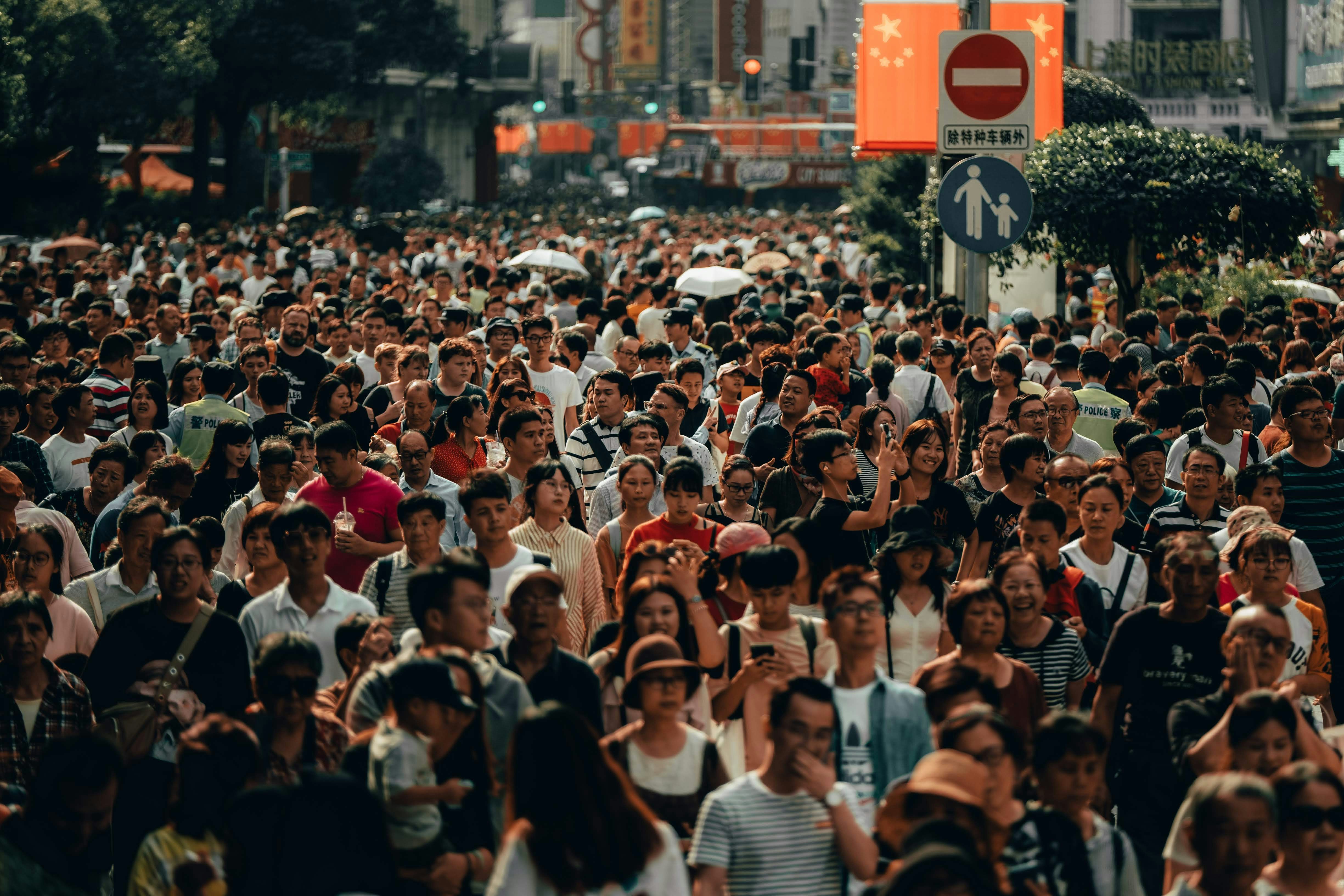
Photo by Owen Cannon on Unsplash
If the world’s ten richest men were taxed 99% of the wealth they gained during the COVID-19 pandemic, they could fund health, climate, and social protection for Earth’s entire population, whilst still leaving them $8bn better off than they were prepandemic (Oxfam, 2022). But they didn’t, and they never would. The elite ruling class, consisting of the ‘top 1%’ as well as those who hold positions of power in society, persistently hoard the majority of the world’s wealth, creating vast economic inequality, and leave the rest of us to suffer because of their greed. So, why is it that when we look to find the root of social issues, so many blame those with the least amount of power in society?
In order to maintain their control, the elite purposefully divide the working class by placing them in opposition to each other, effectively preventing them from uniting to turn against the upper class and distracting them from the fact that inequality is the true cause of the issues they face. This is achieved by blaming certain groups for issues that are typically caused by the actions of, and yet can only be solved by, the wealthy and powerful. The current victims of this scapegoating are immigrants who, despite their vulnerable and relatively powerless position, are currently being blamed for a multitude of the UK’s issues, including poverty and homelessness. Despite false assertions surrounding their entitlements, amplified by the likes of GB News and Nigel Farage, those seeking asylum in the UK are only entitled to food, accommodation and £9.95 per week per person in cash support (£49.18 if food isn’t provided in their accommodation). Many argue that this support should be given to UK nationals, such as the homeless population, rather than to immigrants from other countries. Although, instead of directing this frustration at politicians with the power to enact positive change through laws and policies, protesters are confusingly rallying against immigrants themselves, who they are told are exploiting the UK’s welfare system by the millionaires and billionaires who avoid paying millions of pounds in tax each year (Partington, 2025).
Young (1999) provides an interesting explanation for this phenomenon – relative deprivation downwards. He argues that hate crime, seen in anti-migrant protests and riots, is the result of those who feel a sense of relative deprivation becoming resentful of those whom they believe to be lower in society than themselves but getting an ‘easier ride’ at their expense, despite those people being disadvantaged in ways they are not. Building off of this, the resentment that is felt, and then expressed through hate crime, can be seen as being fuelled by the aforementioned media amplification that positions immigrants as exploitative. This process is an effective distraction technique, as despite the working class’s long-standing reputation of hating the ‘rich’, they aren’t currently directing their anger at those proposing to cut benefits and welfare (Latimer and Oulton, 2025), or at those who exacerbate inequality daily through acts of capitalist greed. They are instead protesting against those who, in a week, have to survive on less money than you would earn working an hour on minimum wage (GOV.UK, 2025).
Despite common belief, the issues that pervade society, such as crime and unemployment, are more closely linked to inequality than to poverty. Wilkinson and Pickett (2010) identify low life expectancy, child mortality, poor educational performance, and imprisonment as issues more common in unequal societies, such as the UK. For example, those without sufficient access to healthcare are at risk of, possibly fatal, health complications, those who live in areas with poorer quality schools won’t perform as well in formal exams, and those without access to legitimate opportunity structures are more likely to turn to crime and be imprisoned. All of these issues are the result of certain groups possessing unequal amounts of wealth and power, leaving others without equal access to the resources that would
provide them with advantages in life.
Despite the pattern of greed, inequality, and scapegoating seen in the elite, all hope is not lost. The more this process is demystified, the greater awareness becomes of the need to regain power and autonomy in our everyday lives – not just physical but mental also. The first step to this is to acknowledge the exploitation and inequality that is experienced because of the actions of the rich and powerful, and to start thinking more critically about the control that institutions have over us in society.
References:
Oxfam GB. (2022). Oxfam GB | Ten richest men double their fortunes in pandemic, while incomes of 99 per cent of humanity fall. [online] Available at: https://www.oxfam.org.uk/mc/np588q/ [Accessed 10 Nov. 2025].
Partington, R. (2025). HMRC criticised by watchdog for failing to track billionaires’ tax. [online] The Guardian. Available at: https://www.theguardian.com/politics/2025/jul/16/hmrc-criticised-by-watchdog-forfailing-to-track-billionaires-tax [Accessed 10 Nov. 2025].
Jock Young (1999). The Exclusive Society. New York City: SAGE.
Oulton, M. and Latimer, E. (2025). When and how should the government protect existing claimants from benefit cuts? | Institute for Fiscal Studies. [online] Institute for Fiscal Studies. Available at: https://ifs.org.uk/articles/when-and-how-shouldgovernment-protect-existing-claimants-benefit-cuts [Accessed 10 Nov. 2025].
GOV.UK (2025). Asylum support. [online] GOV.UK. Available at: https://www.gov.uk/asylum-support/what-youll-get [Accessed 10 Nov. 2025].
GOV.UK (2025). National Minimum Wage and National Living Wage Rates. [online] GOV.UK. Available at: https://www.gov.uk/national-minimum-wage-rates [Accessed 10 Nov. 2025].
Wilkinson, R. & Pickett, K. (2010). The spirit level: why equality is better for everyone. London: Penguin, pp. 15-30.
Contact us
+44 (0) 161 306 6000


0 Comments