
The Smallest Monarchs in the World
In this post, Dr Olivia Mitchell describes her new article, which examines descriptions of shortness and Indian political culture.
My new article, ‘‘The Smallest Monarch in the World’: Othering, Indirect Rule and Depictions of the Heights of the Begums of Bhopal in the Imperial Press, 1872–1914’ is now published in the Journal of Imperial and Commonwealth History. This has been a while in the making; it stems from one of my favourite sections of my PhD thesis, and so I am happy to see if finally out.
When undertaking my research on the Nawab Begums of Bhopal, I collected a large corpus of newspaper articles to identify the varied ways they were represented by the Anglophone press. Using a digital methodology based on annotations of newspaper segments, I was soon able to identify patterns in their depictions, such as how often their rank was related to their military alliance or their femininity was connected to their rulership. One of these was that the Begums of Bhopal were consistency reported as being short, so short that they were deemed ‘the smallest monarchs in the world’. This statement was highly exaggerated: they were not the smallest monarchs as they were in fact taller than Queen Victoria. But what this shows us is how the press promoted the Begums of Bhopal as ‘other’.
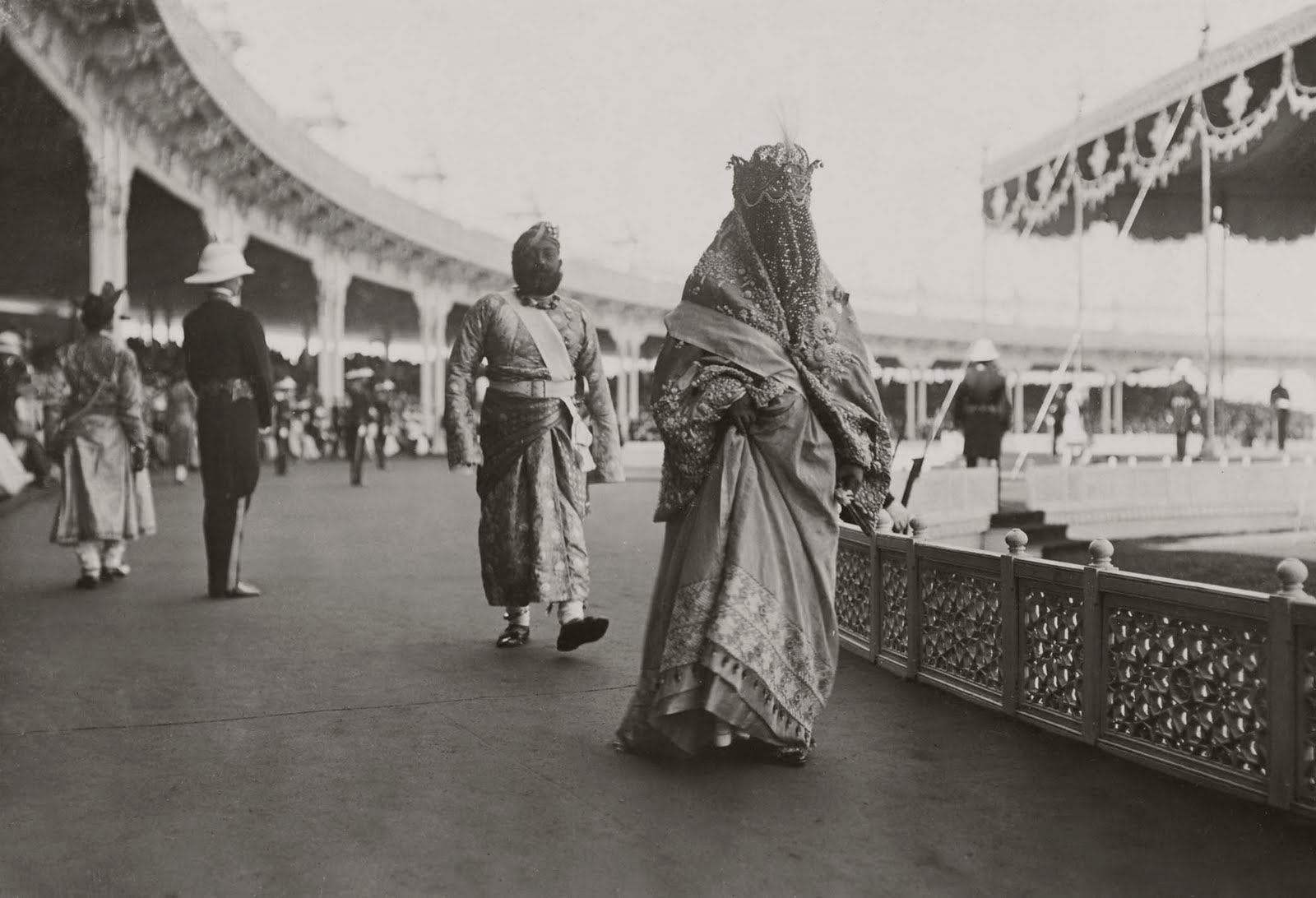
This is noteworthy as the othering within the imperial context has often been associated with the promotion of negative racial stereotyping. This was not the case for the Begums. They were rulers of a princely state and deeply loyal to the British, having showed this loyalty during the Indian Rebellion of 1857, and so it was not in the interests of British to denote the Begums as inferior. They were also the only female rulers in British India to rule outright and wore burkas on public occasions. Because they were covered from head to toe, the only real way to comment on their appearances was on their heights. Shortness in this instance, was a way to show their specific difference as Indian women in power as opposed to portraying them as a racial stereotype.
I hope this article sheds light on the interpretation of racial and gendered histories. Race was not always used, within the imperial context, as a way for colonisers to exert power over the colonised. This case study shows that knowledge of physicality went beyond the binaries and could be used in varied ways. Moreover, othering could be the product of intersecting factors. In this instance, it was a product of the intersections of gender, race, clothing, rank and loyalty that contributed towards the promotion of the Begums as short.
Photograph of Sultan Jahan, Nawab Begum of Bhopal at the Delhi Durbar, 1911
0 Comments