
The 1% economy: Who gains from globalisation and why are the gains so uneven?
Article by Sylvie Haywood
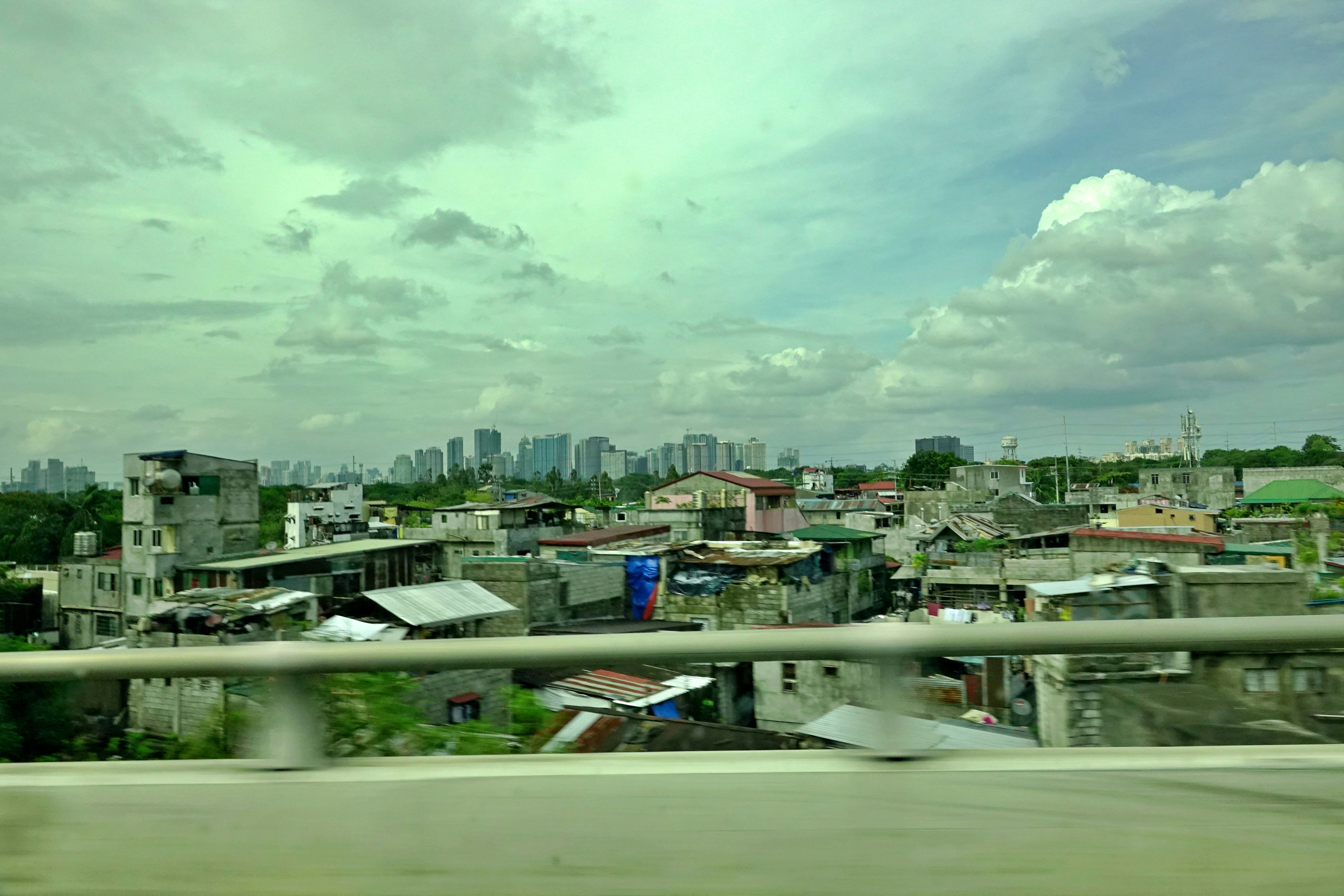
Photo by James Lo on Unsplash
In 2020, Oxfam released that their recent studies had found that the combined fortunes of the world’s 26 richest individuals reached $1.4 trillion, which is the same amount as the total wealth of the poorest 50%.
Since globalisation began, advocates suggested it would stimulate a period of increased wealth, with the implicit promise of a better quality of life and enhanced wealth for the average person. Where overall global wealth has been enhanced, the distribution of wealth has become increasingly uneven. Global wealth inequality distribution has drastically worsened under globalisation, with the gap between rich and poor widening within countries and the wealth of the top 1% growing disproportionately to that of the average individual. Danny Dorling (2019) argues that it is the top 1% that ‘contribute to rising inequality, not just by taking more and more, but by suggesting that such greed is justifiable and using their enormous wealth to promote that concept’.
One definition of globalisation is the ‘intensification of worldwide social relations which link distant localities in such a way that local happenings are shaped by events occurring many miles away and vice versa’ (Giddens, 1990, p64). In other words, Giddens was implying an increase in global interconnectedness. One way in which this can be seen in modern society is with the free movement of money and corporations across borders. However, when it comes to workers, there is little to no free movement between borders. For business owners and executives, this encourages them to shift their production to places with cheaper labour and lower taxes, places in which their corporations will earn the highest return, where workers do not have this privilege and are unable to relocate and move their labour to where their pay will be better. This lack of symmetry within the working world hugely advantages executives and corporation owners, giving one example of how the 1% are able continue their wealth expansion whilst the average worker is disadvantaged in comparison.
As if this factor alone does not make the grounds uneven enough, an idea put forward by Piketty (2014, p27) called Unequal by Design presents the idea that inequality in the global economy is not accidental, but in fact built into the way the system works – with particular reference to the capitalist system.
The key feature of this theory is wealth. Piketty sees individuals who already possess inherited wealth as far more benefitted by the capitalist system, as they are only required to save a portion of the income they make from reinvesting their wealth to keep their fortune expanding. This means that wealth passed down generations tends to grow faster than people’s incomes or the economy as a whole. This puts those who have the privilege of possessing generational wealth at a huge advantage of those from a poorer background at being able to ‘make it’ in a capitalist economy, even without working more. One figure that exemplifies this is that your citizenship and your parental background explain around 60-70% of your income (Brankovic, 2016).
Unequal by design is also able to be interpretated in other ways. This can be seen in the concept of globalisation, where powerful actors are seen to shape the economy’s rules to their advantage. Large corporations and wealthy states have the ability and resources to be able to influence rules and agreements to their own advantage. Not only do these rules enable these large corporations to operate in an almost unregulated way, but they also see to further weaken the rights and protections of workers. For instance, large corporations advocating for lower corporate taxes. The increased post-tax profits often disproportionately are given to shareholders or executive bonuses rather than higher worker wages, meaning the benefits are shifted upwards, towards the 1%.
Something that is important to note when discussing both inequality and the 1%, that these are vastly separate concepts. The top 1% is something that will always exist, a principle that solely refers to the wealthiest one percent of people in a society, whether this is through their income or generational wealth and inheritance. Inequality, however, is a social relation representing the uneven factors that affect people’s life chances. Inequality varies and is able to rise even when the 1% is not dramatically getting richer. By recognising this, we can understand that solely recognising the wealth of the 1% is not enough to tackle inequality in itself but is just one of the uneven structural patterns within our society.
References:
Dorling, D. (2019) Inequality and the 1% (London, Verso)
Giddens, A. (1990) The Consequences of Modernity (Cambridge, Polity Press)
Piketty, T. (2014) Capital in the Twenty-First Century (Cambridge, Massachusetts: Harvard University Press)
Contact us
+44 (0) 161 306 6000


0 Comments