
Climate change: Are we beyond redemption?
Article by Frankie Blee
Phot by Aldward Castillo on Unsplash
Since the Victorian era, the climate has changed drastically as a result of an increase in work in primary industries due to the Industrial Revolution, and the continued burning of fossil fuels has led to unprecedented changes to Earth’s biosphere, with carbon dioxide levels the highest they’ve been in 800,000 years. In addition, scientists have announced that the average global temperature has increased by 1.1%, with 2024 being the warmest year on record, rising by 1.48 °C since the preindustrial era.
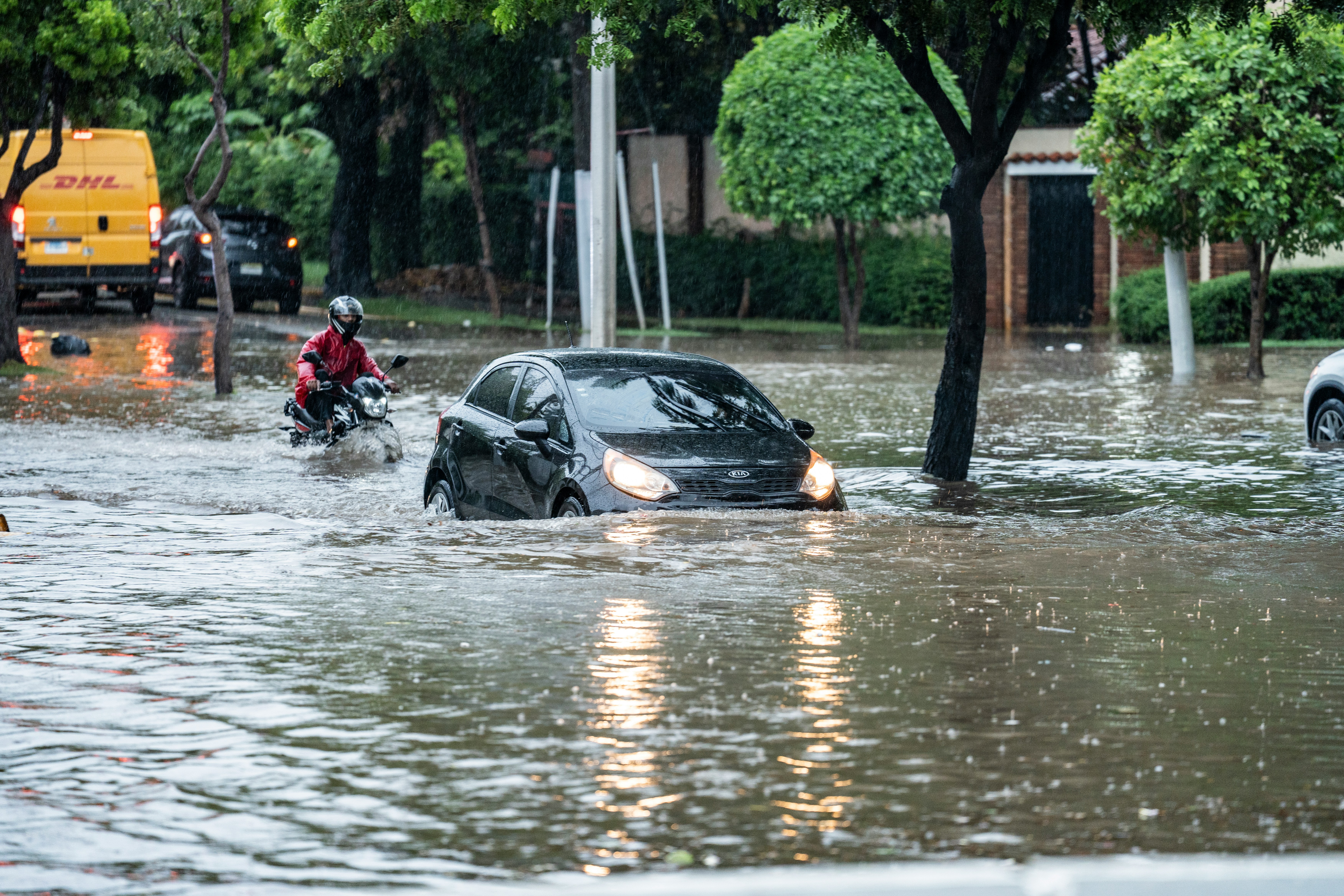
The world’s biosphere is complex, relying on a delicate balance of elements, with a change of one element destabilising whole systems and resulting in everlasting effects on life today. These temperature increases create a very unstable future for our world and are already frequently impacting human life and functionality today. This can be exemplified through the central Texas Floods (July 2025), where more than 20 inches of rain triggered catastrophic flash floods that, to date, killed over 120 people and left nearly 200 missing. This is merely just an example of the issues that are happening, and the steady increase in the frequency but also the impacts of these events: environmentally, socially and economically. If this growth is not mitigated, then the world we live in, and humanity itself, will become alarmingly close to the end.
Leading us to the question: What needs to change?
There have been considerable attempts to mitigate climate change; however, these attempts are very much limited. There are a multitude of reasons for this, one being the effects of capitalism and a concentration of wealth in the hands of owners of capital, allowing wealthy shareholders to have direct political influence through lobbying. Being directly evidenced in COP291 [1], where 1773 representatives from the fossil fuel industries outnumbered the 10 most climate-vulnerable nations combined massively (1,033). This demonstrates that the limitations of mitigating climate change can be inhibited, even in intergovernmental meetings with more advocates for fossil fuels than those in vulnerable nations; in turn, leading to the fact that priorities are unfortunately not where they need to be for redemption to take place.
COP, as an organisation, is attempting for a greener future, but their attempts must be directly supported by leading nations. This is not always the case, with fossil fuel industries receiving 20bn more support from the UK government than renewables [2], 1/5 to support new extraction, in 2015 and 20232. The UK is a clear-cut example of a capitalist economy, with a focus on profit rather than environmental stability. The US further exemplifies this issue, with federal deregulation and rollbacks of climate protections, i.e. Executive Order 14154, which fast-tracked oil, gas and coal development [3]. The capitalist ideology can be seen as a forefront of the issues of the continuing climate problem, and perhaps a change of ideologies may be needed for change.
Capitalism as an ideology involves scaling up and intensifying economic production, which is disastrous for the environment. Due to the domino effect of GDP growth, which demands great extraction of natural resources for consumption, resulting in new pollution and waste, in turn, greatly impacting the environment and resulting in increasing effects of climate change due to ignorance and a focus on profit.
Capitalism as a theory is intimately connected to the socio-economic world, as argued by prominent sociologist Urry [4], who suggests that capitalism is a ‘sorcerer’ who is no longer able to control its own spells. He further argues that the capitalist strategy of unsustainable production and excess capitalism leads to a growing population and rising carbon emissions, causing the fundamental problem of rising temperatures4. Therefore, the denunciation of the capitalist ideology for a greener planet can be supported due to a limited capacity to respond effectively to the glaring problem, due to a focus on economic advancements.
For effective means of mitigating a complete change of ideology is a drastic and difficult measure, and to say, capitalism as a framework is made to destroy the environment is harsh. This demonstrates that capitalism can be a fluid ideology, and perhaps the key to aid in the climate issue due to developments of renewables through profit motives and reform through legal frameworks, such as a developed carbon tax.
For any means of redemption against the climate issue, a shift in priorities must occur. The environment we live in is complex and vulnerable, and must be protected with renewable energies and greener technology for sustainable living.
References
Contact us
+44 (0) 161 306 6000


0 Comments