
Industrial capitalism is killing our world
Article by Zohaib Hussain
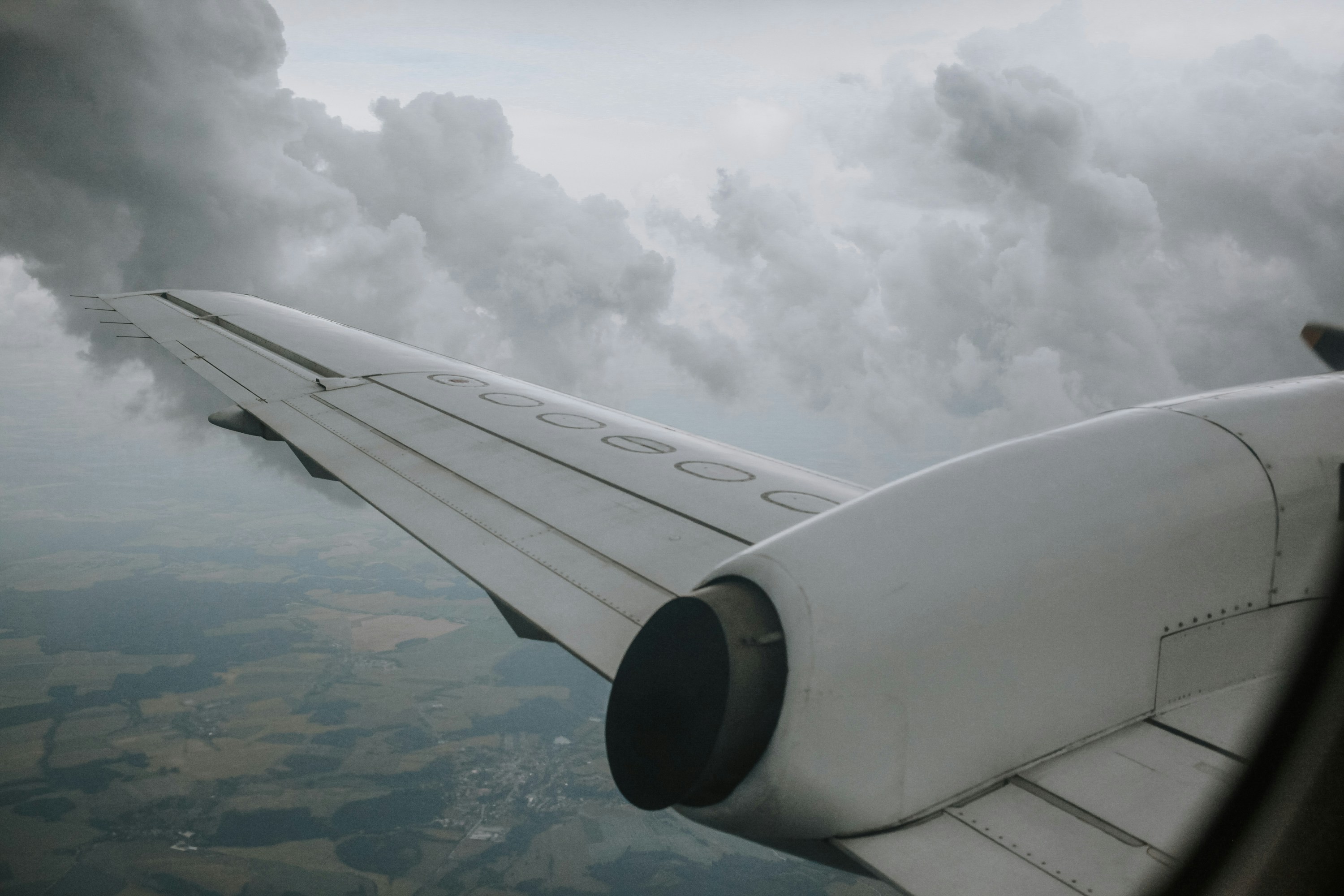
Photo by Stockholm Paris Studio on Unsplash
Since its emergence between the 16th and 18th centuries, capitalism has proven to be one of the most significant systems in human society. This economic system initially evolved to generate widespread economic opportunities and promote collective prosperity. However, over time, the pursuit of profit has transformed capitalism into a global “juggernaut,” a term used by Urry (2009) to characterise the system’s role in driving the world toward potential collapse.
At the centre of it, capitalism depends on the continuous growth of the economy, wanting more production, so more people will consume, so more people will profit. This struggle for endless production and consumption is what capitalism, particularly industrial capitalism, demands. A system that has been designed to expand or collapse, with no room for stagnation. This is a particular problem relating to our world, which is, of course, not endless. The capitalistic growth imperative collides head-on with our limits. Our resources are finite, but capitalism treats them as unlimited. Urry (2009) and others note, this creates “system contradiction”, meaning it is a feedback loop where expansion of the economy is driving environmental destruction, which in turn negatively affects the very conditions that make growth possible. We have built a carbon-based civilisation that is now dependent on the collapse of the world.
Even if society showed the willingness to change, we are entirely dependent on the fruits of industrial capitalism. Our cities, transportation, and shipping routes are built around the use of fossil fuels. Cars, buses, and planes, among many other things, are unique in the way they fit into our lives. They are key tools which we use to get to work and visit our friends and family, and cannot be easily substituted by other means. This is what Urry calls the “mobility complex”, a system that links our identities and our status to consumption and movement, making us beholden to capitalism.
Sociologist Zygmunt Bauman had described this as a “stratification of mobility”, defining our society as one where the rich can consume, drive, and fly without any restraints, whilst the poor are trapped, physically and economically. Inside this system, carbon emissions aren’t just a byproduct of lifestyles, but in fact are the currency of modern life. To eradicate this current structure would require not just new technologies, but an entire overhaul in how we exist as people.
Urry traces how, in the 20th century, what he calls “emergent contradictions” were brought out through a shift from society being low-carbon to high-carbon. Capitalism, he argues, has become a “sorcerer who can no longer control the powers he called up by his spells”. The powers refer to industrial growth, fossil fuel energies, and global mobilities, among others, which have now taken on a life of their own, destabilizing nature and society.
The evidence is clear to see. According to the Intergovernmental Panel on Climate Change, the warming of the Earth’s atmosphere is now “unequivocal”, meaning that there is no more debate on whether climate change is real or not; it simply is. From examples of melting ice caps to methane leaks, these are all examples of positive feedback loops, changes that are amplifying climate change. Urry notes that these loops are the ecological and social outputs of capitalism, exposing its logic: growth that is fuelled by the consumption of itself.
Furthermore, the capitalist system of our world is now entrenched in both fossil fuels and in the social institutions that are built around them. Urry writes, “Today’s global economy is deeply dependent upon, and embedded into, abundant cheap oil”. And the “Empire of Oil” as environmentalist Jeremy Leggett calls it, represents the most powerful interest group in the world. The group has hands controlling politics, markets, and even military agendas. Attempts for reform are put down by those very forces that profit from stagnation.
Urry is warning us that if these feedback loops continue unchecked, the 21st century will bring forward one of three futures: regional warlordism, where societies will collapse, resources going into scarcity, and people surviving in tribes under warlords. The second future, local sustainability, is where small communities survive, isolated from each other. Or even a third, a digital panopticon, a world of constant surveillance, stark inequality, and technological control. All of these potential scenarios signal a collapse of the idea of continuous progress.
His conclusion is bleak, “Twentieth-century capitalism generated the most striking of contradictions- a high-carbon society whose dark legacy we are now beginning to reap”. In essence, capitalism is risking digging its own grave.
What once sounded like a warning now sounds like a prophecy. Gandhi’s words, “The world has enough for everyone’s need, but not enough for everyone’s greed”, now reverberate in our hearts with increased urgency. Unless humanity drastically reevaluates its relationship with growth, consumption, and energies, the very forces that have built our modern civilisation may be the reasons to bring it to an end.
References:
Urry, J. (2009). Sociology and Climate Change. The Sociological Review, 57(2_suppl), 84-100. https://doi-org.manchester.idm.oclc.org/10.1111/j.1467-954X.2010.01887.x (Original work published 2009)
Bauman Z., (1998), Globalization: The Human Consequences, Cambridge: Polity Press.
Leggett J., (2005), Half Gone. Oil, Gas, Hot Air and Global Energy Crisis, London: Portobello Books.
Contact us
+44 (0) 161 306 6000


0 Comments