
Why Is Our World Stuck On A Carbon Treadmill? And Who Is Keeping The Machine On?
Article by Rameesa Ali
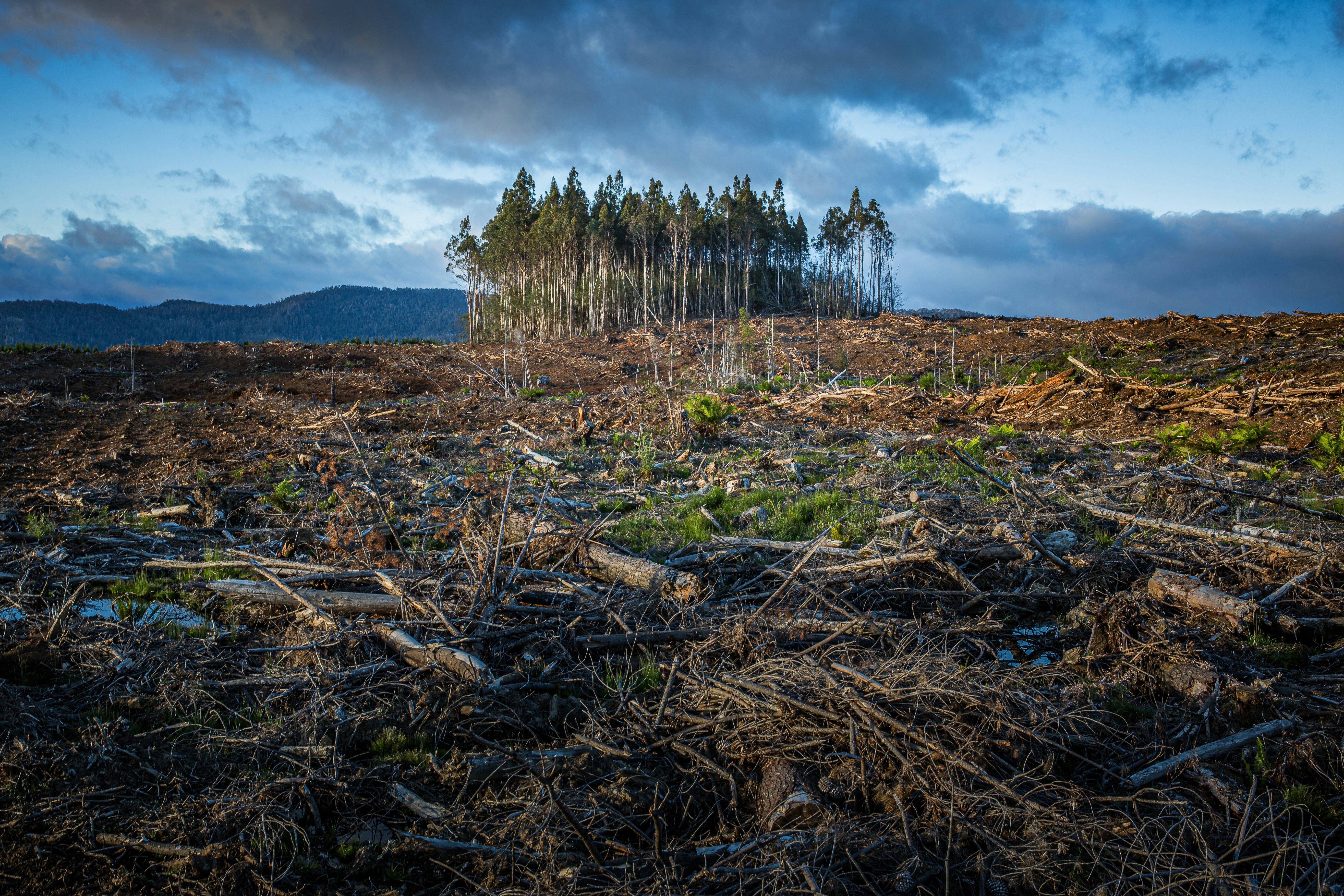
Photo by Matt Palmer on Unsplash
As the years slip by, the seasons feel increasingly out of sync, with headlines appearing on the news announcing, ‘Summer 2025 is officially the warmest summer on record, with a mean temperature of 16.10°C’, (Met Office, 2025) and winters becoming exceptionally warmer. This is due to the over-extraction of natural resources for production and ultimately increasing greenhouse gases in the atmosphere. Much of this links back to the way capitalism operates.
Capitalism, a system built by landowners, firms, and proletarian labour, runs on an unwavering single heartbeat: profit. The father of modern economics, Adam Smith (1776) stated, “It is not from the benevolence of the butcher… that we expect our dinner, but from their regard to their own interest.” And this self-interest pays wages to labourers, rent to landowners, and profit to firms. Constant economic growth is capitalists’ main priority, often at the expense of environmental sustainability. The desperate hunger for ‘more’ urges capitalists to intensify economic production and speed up what Schnaiberg (1980) calls the carbon treadmill of production. It’s difficult to slam the brakes when the whole system glorifies acceleration. The IPCC finds that CO₂ emissions released into the atmosphere not only impact climate change today but will continue to do so for hundreds of years due to their long lifetime in the environment. Although the clean-up can only ever be partial due to some irreversible changes, it’s always better late than never.
As Ulrich Beck (1992) put it, “The social production of wealth is systematically accompanied by the social production of risks.” The rapid progression of technology and relentless extraction of natural resources to produce designer bags, clothes, and luxury cars, have generated complex risks — pollution, climate change, biodiversity loss, and habitat destruction. This raises an uncomfortable question: who is really behind this environmental degradation — the producers who manufacture these things, or the consumers who constantly demand them?
Materialism is not simply a matter of personal choice; we have been conditioned by the system through advertising, social norms, and convenience to buy its products. This clearly shows that responsibility lies not with individuals — who are influenced to buy unnecessary things in the pursuit of happiness — but rather with a capitalist system unwilling to press on the brakes to prevent a crash. “Contemporary capitalism presupposes and generates… pleasure-seeking and novelty-acquiring bodies… able to buy and indulge new experiences.” Urry (2009) clearly states that capitalists create desires and don’t merely respond to them, highlighting that the question of “producer vs consumer” misses the whole point because the system forces both parties onto the same carbon treadmill of production. Producers produce, the system advertises and promotes simply to make profit, and then consumers consume, leading both groups to run on the treadmill that the system is controlling.
As the treadmill keeps on running, the environment is having difficulties catching up. In addition to creating money and consumption, the system also creates environmental hazards. These hazards are frequently imperceptible and irreversible, with climate change emerging as the most significant risk. Rising sea levels, droughts, forest fires, and water scarcity are some of the effects of climate change that impact both people and wildlife (United Nations, no date). These risks are systematically produced by the system. While some contend that green capitalism or technological advancement could lessen these effects, Beck’s concept of the boomerang effect — and the idea that nature doesn’t respect wealth, propaganda, or consumerism — shows that no one is safe from climate change. “Risks of modernization sooner or later also strike those who produce or profit from them.” (Beck, 1992). This demonstrates how everyone is being impacted by environmental degradation, and since some of the threats are irreversible, we must cooperate to reduce those that can still be reversed. Urry also develops Marx and Engels’ idea that modern bourgeois society “is like the sorcerer, who is no longer able to control the powers of the nether world whom he has called up by his spells.” Urry (2009) argued that high-carbon capitalists are the sorcerers who have cast spells for too long and are now losing their ability to control them. The issue with this is that capitalists are unable to slow down because their mechanisms require ongoing expansion, despite consistently seeing warning signs of the problems that could arise if they don’t operate in a more environmentally responsible manner.
Therefore, the system that keeps the carbon treadmill of production running needs to be changed, not only our expenditure and recycling habits. Only by releasing the hold of profit-driven organisations and adopting more low-carbon decisions will we be able to create a more pleasant and liveable world in the future. Collectively, what we need to stop is getting caught up in the speed of the treadmill and finally learn how to slow it down through political resistance and protests.
Reference list
Beck, U. (1992). Risk Society: Towards a New Modernity. Sage Publications.
Jahan, S. and Mahmud, A.S. (2025). What Is Capitalism? [online] International Monetary Fund. Available at: https://www.imf.org/en/Publications/fandd/issues/Series/Back-to-Basics/Capitalism.
Office, P. (2025). Summer 2025 is the warmest on record for the UK. [online] Met Office. Available at: https://www.metoffice.gov.uk/about-us/news-and-media/media-centre/weather-and-climate-news/2025/summer-2025-is-the-warmest-on-record-for-the-uk.
Orr, D.W. and Schnaiberg, A. (1980). Review of The Environment: From Surplus to Scarcity. Human Ecology, [online] 8(4), pp.412–414. Available at: https://www.jstor.org/stable/4602575.
Smith, A. (1776). An Inquiry Into the Nature and Causes of the Wealth of Nations (Cannan ed.), vol. 1 | Online Library of Liberty. [online] oll.libertyfund.org. Available at: https://oll.libertyfund.org/titles/smith-an-inquiry-into-the-nature-and-causes-of-the-wealth-of-nations-cannan-ed-vol-1#.
Urry, J. (2009). Sociology and Climate Change. The Sociological Review, 57(2_suppl), pp.84–100. doi: https://doi.org/10.1111/j.1467-954x.2010.01887.x.
World Meteorological Organization (2025). Carbon dioxide levels increase by record amount to new highs in 2024. [online] World Meteorological Organization. Available at: https://wmo.int/news/media-centre/carbon-dioxide-levels-increase-record-amount-new-highs-2024.
Contact us
+44 (0) 161 306 6000


0 Comments