
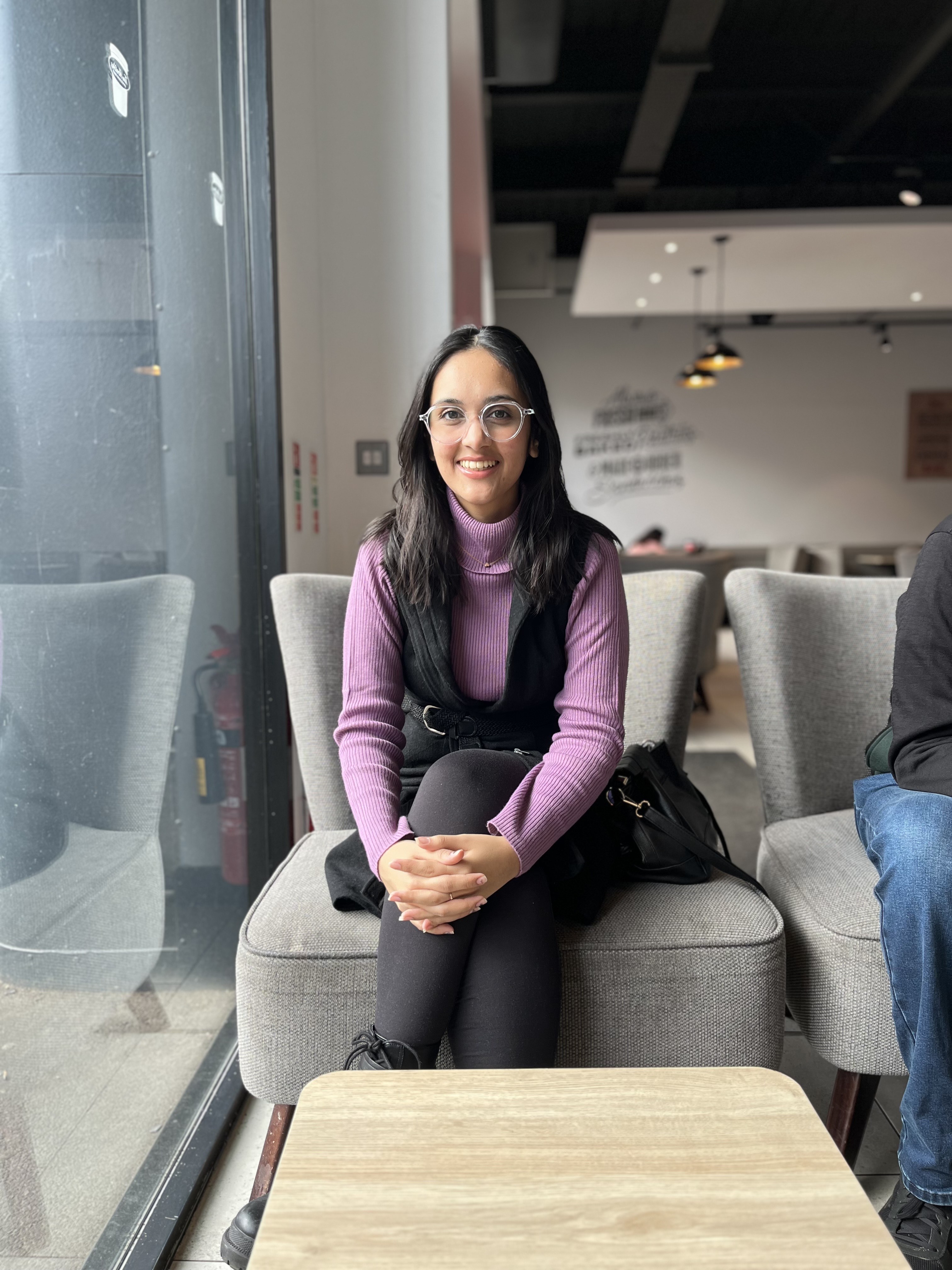
Rishita Shukla – MSc Organisational Psychology 2024 – Alumni Profile
My Background Before Joining the Programme:
I had the incredible opportunity to be part of the MSc Organisational Psychology cohort for 2023-2024 at the University of Manchester—a journey that truly transformed my perspective. My academic path began with a B.A. in psychology, political science, and English literature, but it was during my final year, studying Social Psychology and Research Methodology, that I truly discovered my passion for Organisational Psychology.
Ranking third in my university among 20,000 students along with my proactiveness in learning research methodologies, opened the door to the University of Manchester, where I was eager to dive into this dynamic field. During my gap year, I interned at an IT firm as an HR intern, working on exciting projects focused on Employee Experience and Leadership Training & Development. This hands-on experience not only solidified my enthusiasm for Learning and Development (L&D) but also ignited my interest in analytics and research – now at the heart of my specialisation.
Why I chose MSc Organisational Psychology at The University of Manchester?
My journey towards pursuing a master’s degree began when I first discovered the University of Manchester while working on my bachelor’s final research report. As I mapped out my eligibility for the master’s program, I was excited to find that the course content was not only well-defined but also thoughtfully structured to provide the resources needed to make a meaningful contribution to the field.
The University of Manchester stands out with its impressive ranking—35th in the world and 6th in the UK – which speaks volumes about its academic excellence. I was particularly drawn to the modules such as Research Methods, Relationships at Work, and Managing People and Organisations, which align perfectly with my academic interests.
What truly excited me about this program was its logic-oriented pedagogy combined with a rich blend of theoretical and empirical learning approaches. This combination promises the essential exposure I needed to thrive in the industry. Hence, I was eager to join such a prestigious institution. I saw and now firmly believe it as an opportunity to elevate my skill set and academic knowledge, laying a strong foundation for a successful career in research and the professional world.
Memorable experiences or key takeaways from my time here:
My time at the University of Manchester wasn’t just about academic learning; it was also my first experience living away from home. Naturally, it took some time to adjust to a new country, but the diversity and vibrancy of Manchester made it easy to find comfort and belonging in a new environment.
From cultural exchanges and finding my way around the city streets to developing a completely new outlook on learning and critical thinking, UoM played a significant role in shaping who I am today, as a person, a researcher, and an organisational psychologist.
I fondly remember sitting on the university greens after lectures, basking in the sun, exploring the city and new cuisines with friends, and most importantly, learning a whole new academic approach that was very different from the Indian education system.
One of my most cherished memories is spending long hours in the lab working on research projects with my batchmates. The spirit of collaboration – mutually learning, teaching, and building lasting friendships – made those experiences unforgettable.
A key takeaway from my time at UoM is that learning the right way to do something is more important than merely doing the right thing. This mindset helped me navigate modules that initially seemed intimidating. With patience, perseverance, and consistency, I eventually earned distinctions across all of them.
You will be a part of the world’s sixth most Instagrammable university, so make sure to pull out your camera and take photos of the campus whenever possible! There are countless stunning spots to showcase!
My career development or current role since graduating:
Since graduating from the University of Manchester with a Master’s degree in Organisational Psychology, I have built a career that sits at the intersection of research, people practices, and well-being. I began my professional journey as an Organisational Psychologist at Acrocare – Centre for Happiness and Well-being, an initiative supporting a group of educational institutions. In this role, I was involved in conducting applied research, designing and delivering training and development programmes for faculty members, and facilitating workshops focused on mental health, emotional well-being, and workplace effectiveness.
Currently, I work as a People Science Associate at inFeedo AI, where my role has further strengthened my ability to integrate organisational psychology with AI, technology and analytics. Here, I work with large-scale employee data, behavioural insights, and engagement metrics via surveys to understand workplace experiences, inform people strategies, and support organisations in creating healthier, more responsive work environments. This role draws heavily on the statistical, analytical, and research interpretation skills I developed at the University of Manchester, particularly in applying psychological theory to real-world organisational challenges.
Beyond technical skills, UOM instilled in me a mindset to question assumptions, engage with complexity, and connect science with empathy. The university’s motto, “Original Thinking Applied,” continues to resonate deeply with my work. My time at Manchester did not simply prepare me for a career; it shaped how I understand organisations, people, and well-being and how I aim to contribute meaningfully to the evolving world of work.
How the course supported my career development:
The course at the University of Manchester played a pivotal role in shaping both my professional and personal development. It not only deepened my understanding of organisational psychology but also refined the way I approach learning, problem-solving, and research. The curriculum’s strong focus on evidence-based practice, critical analysis, and independent thinking helped me transition from being a student of psychology to becoming a practitioner who can apply theory meaningfully in real-world contexts.
Through diverse modules, I learned how to design and conduct research, interpret data, and critically evaluate workplace practices, all of which now form the foundation of my work in People Science. The exposure to global perspectives and collaborative group projects also enhanced my ability to work across different cultures and professional backgrounds, an essential skill in my current role.
The support, mentorship and detailed feedback on each assignment and exam that I received from faculty members further encouraged me to explore my interests. Their guidance instilled in me the confidence to lead initiatives, design training interventions and conduct applied research – skills that continue to guide my career trajectory today.
Along with that, my role as a Student Ambassador helped me grow my experience in every way. It was rewarding to take webinars and lead campus tours for prospective students and their families, showcasing the vibrant atmosphere of our institution. My time as a Student Ambassador enhanced my interpersonal skills and deepened my commitment to making a positive impact within my academic community.
Any advice you’d offer to future applicants:
Spend as much time as you can making full use of the incredible study resources available at the University – the study halls, labs, and libraries are wonderful spaces to focus, reflect, and grow. Try to carve out time for self-study sessions too; they help you dive deeper into your subjects and discover what truly excites you about your field.
While work experience like internships or projects isn’t mandatory for most courses, it significantly enhances your understanding and application of the material.
Don’t hesitate to explore new opportunities, places, or experiences. The more you step outside your comfort zone, the easier it becomes to adapt, connect, and learn from people around you. University life is as much about personal development as it is about academic growth, so be open to everything it offers.
Start applying for jobs and internships early, even if they’re small or part-time. Every work experience counts and teaches you something valuable – whether it’s time management, teamwork, or understanding workplace dynamics. These experiences add immense practical depth to your academic knowledge and make the transition into your professional life much smoother.
Most importantly, stay curious and engaged. Every lecture, discussion, and research project is a chance to expand your perspective. Manchester has a beautiful way of teaching you not just what to think, but how to think, and that lesson will stay with you long after graduation.
Happy learning! Hope you carve out a great story from your UOM experience too!
Related
Contact Us
+44 (0) 161 306 6000


0 Comments