
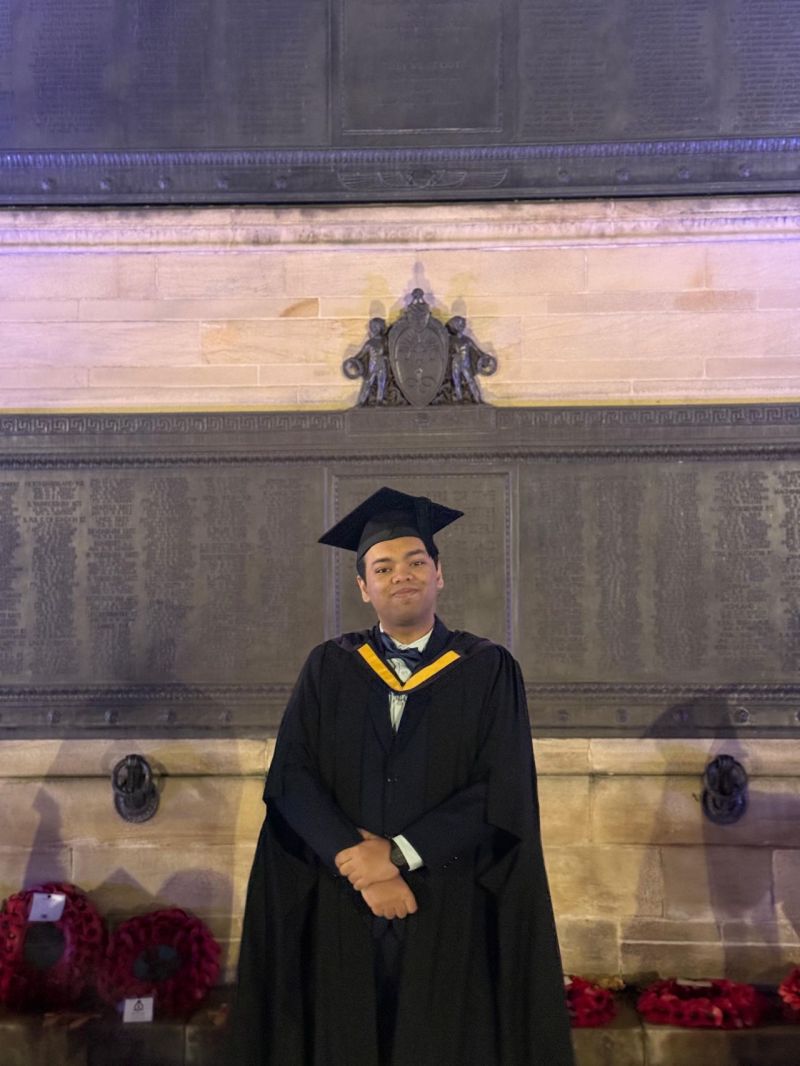
Abhiram Saran – MSc Management 2025 – Alumni Interview
Q: Looking back, what is one thing you wish you’d known during your MSc that would have made your transition into work smoother?
A:
I wish I had understood the importance of a structured routine. I was quite unorganised during my MSc — I had no routine, just a set of tasks to do whenever I had the time and energy to do so. This often led to instances of me cooking dinner at 2 AM or working on easy assignments last minute because I prioritized more challenging tasks. The lack of a fixed academic or social schedule every day didn’t help either — some days I was home by 4 PM, while others I returned close to midnight.
All of this made the transition to a 9-5 corporate role quite challenging, even though my company only required 3 days a week in-office. The monotony of doing the same tasks at the same time every day felt constricting because of its unfamiliarity. I also wish I had practiced a more stable sleep schedule at university. While it’s easy to stick to a routine when you have morning alarms and weekday exhaustion, keeping that consistency over weekends and longer breaks is something I still struggle with today. Building these habits earlier would have made the shift to professional life far smoother.
Q: Were there any opportunities (e.g., networking events, attending careers appointments or workshops) you wish you’d taken more advantage of while studying?
A:
I feel I made pretty good use of the university’s resources in my time at graduate school. I regularly attended career fairs, CV review sessions, career insights and job search workshops in my first semester while I mass-applied to graduate schemes. In the second semester, I tried to focus more on the social side — student organization socials, university-funded daytrips, and creative activities. While I worked on my dissertation over the summer, I utilized the career service’s mock interview sessions, which were instrumental in helping me secure my current role. That said, I do wish I had taken better advantage of informal networking opportunities, such as company visits, coffee chats with recruiters, and one-on-one socials. These interactions often provide insights and connections that structured events can’t replicate.
Q: If you could go back to your first semester, what mindset, habits, or skills would you focus on developing sooner?
A:
If I could go back, I would definitely aim to develop a greater sense of discipline. Almost everything aspect of academic life is directly linked to discipline and routine. The more organized and motivated you are, the greater your output and chances of success. I would also like to work on nurturing a long-term outlook of my future — essentially view setbacks as momentary road bumps in a long marathon. In the long run, your work ethic and skillset will carry you forward, and a big-picture view can make graduate school feel less overwhelming. Finally, I would start interview preparation earlier. It’s one of those things that feels distant until suddenly it’s urgent. Building confidence and familiarity with the process early on would have saved me a lot of stress later.
Q: What’s one piece of advice you wish you had heard as a student?
A: Resilience is the name of the game. You will face rejection in the job market and encounter academic challenges, but you owe it to yourself to soldier through. I think it can be grounding to remember the amount of work you put in to get to the position you are today — a graduate student at an elite university — and use that as a springboard. Don’t let temporary setbacks define your path. You’ve come too far to give up simply because the odds seem stacked against you. Your future self will be incredibly grateful for the resilience and effort you’ll be putting in today and will probably look back at your current self with a lot of grace.
Related
Contact Us
+44 (0) 161 306 6000


0 Comments