
New study reveals how sleeping sickness parasites impact the female reproductive system and immune response
A new study published in PLOS Pathogens sheds light on how long-lasting parasitic infections affect the female reproductive tract and its local immune environment. Led by Dr Juan F. Quintana, with PhD researcher Olivia Shorthouse as first author, the research investigates the impact of Trypanosoma brucei – the parasite responsible for African trypanosomiasis (sleeping sickness) – on uterine tissue and reproductive function.
The research team discovered that these parasites are capable of residing within uterine tissue, where they provoke local immune responses and chronic inflammation. Beyond local tissue effects, the persistent infection disrupts key hormonal and neurological signalling pathways between the brain and the reproductive system, ultimately compromising normal reproductive health.
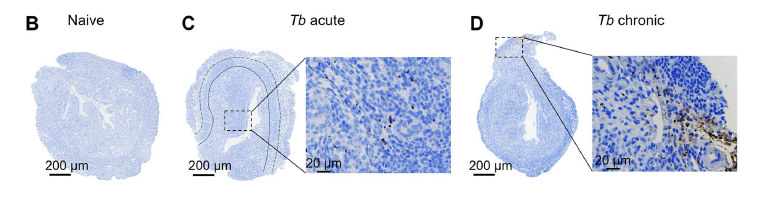
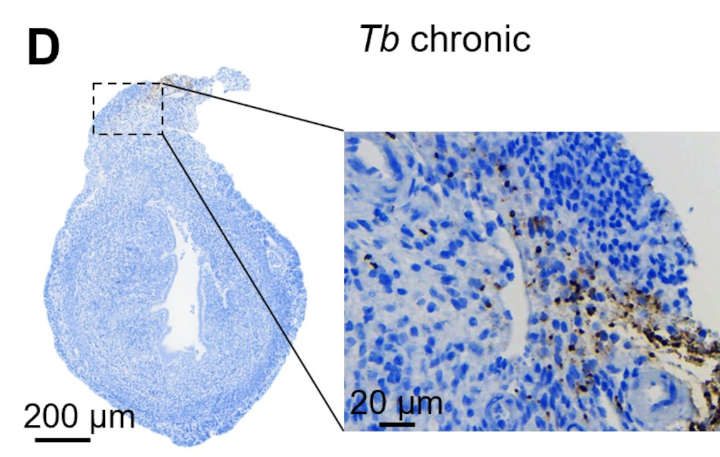
Representative image of immunohistochemistry staining the T. brucei-specific protein BiP in uterine cross section from chronically infected females (scale bar=200 µm; scale bar zoom=20 µm; solid line separate endometrium and myometrium, dashed line separates inner and outer myometrium).
“These findings could help us better understand how long-term infections affect women’s reproductive health. They also raise an important question: could the parasite be passed from mother to child? Understanding whether this happens could have implications for how sleeping sickness is controlled and managed.”
Dr Juan F Quintana
African trypanosomiasis is a vector-borne disease that primarily affects rural communities in sub-Saharan Africa. While the systemic and neurological impacts of sleeping sickness are well-documented, its specific effects on tissue-specific immunity within the female reproductive tract have remained poorly understood.
By identifying the uterine tissue as a site of parasitic persistence and detailing the resulting immune disruption, this study provides critical foundational knowledge for future therapeutic strategies and disease management protocols aimed at protecting maternal and reproductive health.
This research was published in PLOS Pathogens (October 2026). Full title of the paper: Trypanosoma brucei infection remodels the uterine immune environment and drives neuroendocrine dysfunction.


0 Comments