
Gambling, Excessive Tourism, and Extreme Capitalism: Is Las Vegas’ Casino Culture Facilitating the Climate Crisis?
Article by Ellen Taylor
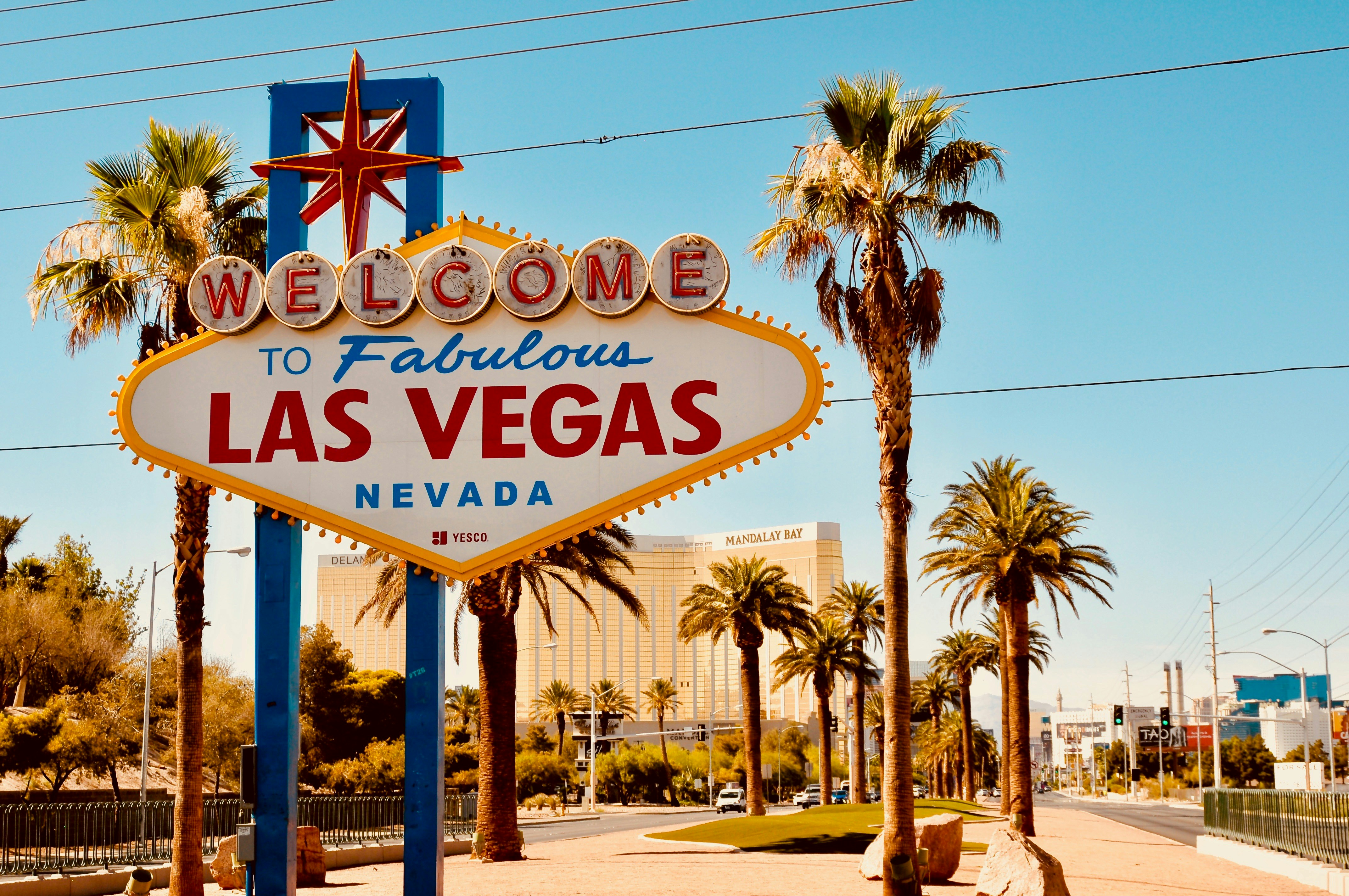
Photo by Grant Cai on Unsplash
We all know the famous saying, ‘what happens in Vegas, stays in Vegas’. Yet, in relation to climate change, this statement could not be further from the truth. With its flashing lights and promises of gambling successes, Las Vegas remains one of the most visited places in the world, let alone the United States. 2024 saw the income of 41,676,300 tourists, generating a gaming revenue (in Clark County) of around $13,567,388,000. Whilst these figures seem all well and good to the tourist industry and to Nevada’s economic reputation, Nevada is facing greater problems. Las Vegas is experiencing record high temperatures and in 2020 there where over 124 heat-related deaths. Its temperatures are rising much faster than any other US state.
You may be wondering; how does this relate to gambling? Well, casinos and betting shops are an essential part of the Las Vegas tourism industry. Reports conducted by the American Gaming Association (AGA) revealed that the casino industry contributes almost $329 billion annually to the US economy. AGA CEO, Bill Miller, stated “In Nevada, the gaming industry funds roughly a third of the state’s general fund.” The excessive consumption ever present in areas such as Las Vegas is playing a key role in facilitating extensive carbon consumption. It has been revealed that carbon use within transport accounts for 14% of greenhouse emissions. As a popular tourist destination, it could be correctly assumed that air-travel to Las Vegas is frequent and thus impactful on global warming.
However, the most pressing link between the dangerously high temperatures in Nevada and gambling culture may best be explained through what Sheller describes as ‘neo-liberal casino capitalism’ (Sheller, 2008: 480 cited in Urry, 2009). A common feature of capitalist society is that it is always evolving. With that, comes the creation of new forms of pleasure (Urry, 2009). In this case, ‘pleasure’ takes the form of flashing lights on a slot machine, or the suspense of waiting to see which cards are revealed in a game of poker. Although the casino culture within Las Vegas is not necessarily a new phenomenon – gaining popularity in 1931 – society has developed to create a ‘high mobility system’ (Urry, 2009). A ‘high mobility system’ is one in which it is expected, or at least normalised, to travel for pleasure. As a result, more people are visiting Las Vegas and this societal development can be seen in the 2024 Las Vegas visitor volume, which saw a 2.1% increase from the previous year.
It is also important to mention that, with an increase in gaming tourism comes an increase in casino construction, to meet demand. For example, the Fontainebleau opened recently, in December 2023. Casino construction contributes to a variety of environmental issues such as deforestation, soil degradation, land and air pollution and the destruction of animal habitats. Additional, casinos in Las Vegas operate on a twenty-four/seven basis and thus require significant amounts of energy to operate efficiently. As mentioned previously, Clark County is the seat of Las Vegas and its popular gambling area, with gaming revenue reaching around $13,567,399,000 in 2024. On 25th February 2023, 7.89% of Clark County classified as being in ‘extreme drought’. It is important to note that this correlation does not equal causation. However, the increase in extreme weather along with vast numbers of pleasure-seeking tourist is too great a coincidence to be ignored when considering such drastic changes in the state’s climate.
On the other hand, it is important to recognise that, whilst the rise in ‘casino capitalism’ is a contributing factor to the increasing temperatures in Las Vegas, changes are being implemented. Major casinos and resorts in the state are taking measures to become more sustainable. The Resort World Hotel’s head of sustainability, Brandon Morrison, announced in 2023 that they were investing more than $1billion in energy efficient upgrades. Furthermore, Vegas is second in the US for solar capacity, with influential German architect, Steffen Lehmann, stating, “Sin City could be called Solar City.” So, progress and the fight for change is present. But, as stated in his article on the Discussion on “Global Warming and Sociology”, Leahy explains, “there is no way forward without a drastic reduction in consumption and production” (Leahy, 2008: 480 cited in Urry, 2009). Thus, raising the questions: are suitable measures being taken? Or should the state of Nevada take on a more drastic approach to the climate crisis by scaling back on its encouragement of mass consumerism? The future remains unclear, but one thing is for certain, drastic action must continue.
Contact us
+44 (0) 161 306 6000


0 Comments