
We’re not people who love going far, we’ve been shaped by a “long-distance system”
Article by Jiale Li
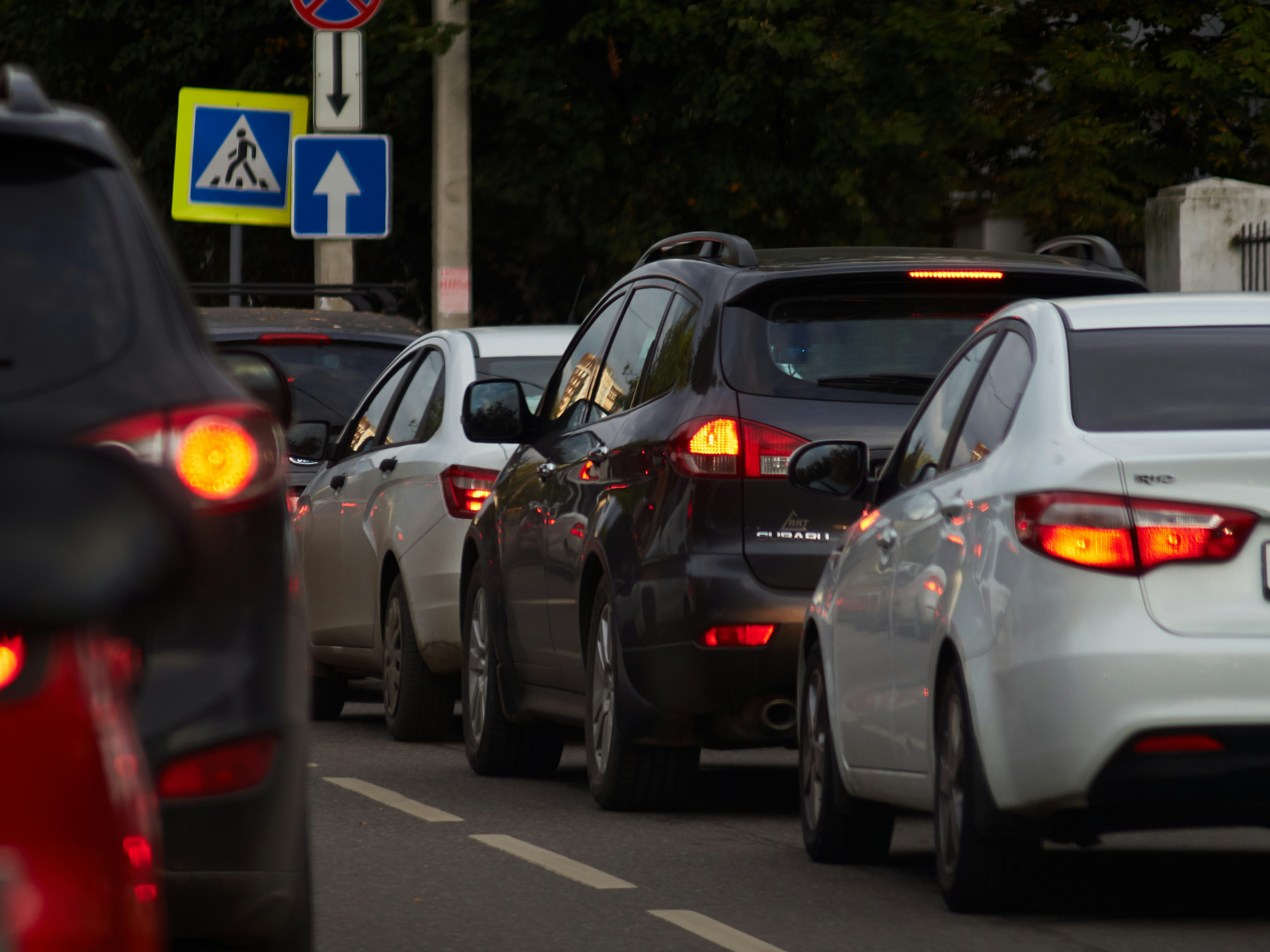
Photo by Kathy on Unsplash
Ruled by “delivery in minutes,” “notifications that summon,” and “book-and-go” flights, I once mistook this for freedom. Reading John Urry’s Sociology and Climate Change made the story harder to sustain. We live inside a self-reinforcing, interlocked high-carbon mobility complex: roads and airports, cars and suburbs, platform logistics and de-spatialised consumption all lock together to hard-code “farther, faster, more” as everyday default. This isn’t a moral plea to “fly less.” It’s a call to rewrite the operating system of daily practice.
Zoom out and the data are blunt. This, from an Intergovernmental Panel on Climate Change report, among many such reports, shows transport contributes about 15% of global greenhouse-gas emissions and about 23% of energy-related CO₂, and it has kept rising since 1990. In 2024, energy-sector CO₂ emissions reached another record, with atmospheric CO₂ reaching new highs. The curve isn’t bending by itself, and the “efficiency myth” won’t save us.
The core insight by Urry is lock-in through path dependence. High-carbon infrastructures and imaginaries were co-solidified as normal in the twentieth century through electricity networks, steel-and-oil automobility, and suburban living. Real decarbonisation involves the reorganisation of social life so that low-carbon activities become new path dependencies, rather than merely fiddling with prices or changing the hardware. I agree because the technical gains get swallowed up by the system: the classic rebound effect.
When efficiency rises and usage costs fall, total use climbs and erodes the savings. More efficient cars can induce more kilometres, slicker logistics train us to expect “next-day as baseline.” Without caps on totals, efficiency dividends are instantly spent as extra distance and extra orders.
There’s a deeper lock-in at the level of culture. Since the twentieth century, “speed” has been equated with efficiency, “circulation” with freedom, and “consumption” with happiness. A society running on that accelerator measures value in minutes and progress in convenience. Even “slowness” is sold as a luxury. When identity and status are fused to high-velocity mobility, any attempt to slow down looks like failure. Urry’s reminder lands sharply: changing this temporal culture may be harder than refitting the energy system.
And resistance is real. For instance, the “15-minute city,” a concept to return daily needs into walking and cycling reach and make proximity a premium rather than a compromise. In the UK, some politicians and conspiracy narratives miscast it as a “climate lockdown,” leading Oxford to drop the phrase from planning documents while retaining practical measures. It is not the failure of an idea but what happens when you touch the default settings of behaviour and space and, therefore interests and identities. Systems don’t budge on reason alone.
So what now? I proposed that make low-carbon the system default, not a will-power project for individuals:
First, set mileage KPIs for the system. At the city scale, hard-target “per-capita motorised travel distance” and “last-mile freight vehicle-kilometres,” with year-on-year reductions tied to budgets and performance reviews. This goes straight at rebound’s root cause, locking in efficiency gains instead of letting new demand eat them.
Second, reorder infrastructure priorities. Make continuous footways, bus priority, and connected cycling grids the default while require justification for high-frequency short car trips. Roads and zoning are behavioural engineering, as Urry argues, and the IPCC underscores how urban form shifts travel demand. Change the street and you change the person.
Third, rewrite platform and organisational rules. For meetings: “online by default; in-person requires a carbon-budget sign-off.” For e-commerce: “bundled delivery gets the discount; instant delivery pays the carbon premium.” This isn’t anti-mobility; it separates necessary movement from system-manufactured over-mobility, aligning with the transport structure shifts highlighted in net-zero pathways.
I’m done pretending this is about individual laziness. Sociology’s value is to show that people aren’t the problem, and technology alone isn’t the cure; the problem and the cure are embedded in the system. When cities make proximity a premium default, firms bake low-carbon into operating rules, and policy uses total-volume circuit breakers to neutralise rebound, low-carbon stops feeling like sacrifice and starts reading as a smarter, more resilient form of abundance.
If that future actually lands, the next generation will grow up in walkable cities. They won’t need to learn the term “carbon budget” to live gently on the planet, by which it will simply be how the operating system works.
Contact us
+44 (0) 161 306 6000


0 Comments