
Will Fast Fashion Be The Downfall of Our Planet?
Article by Lucy Groark
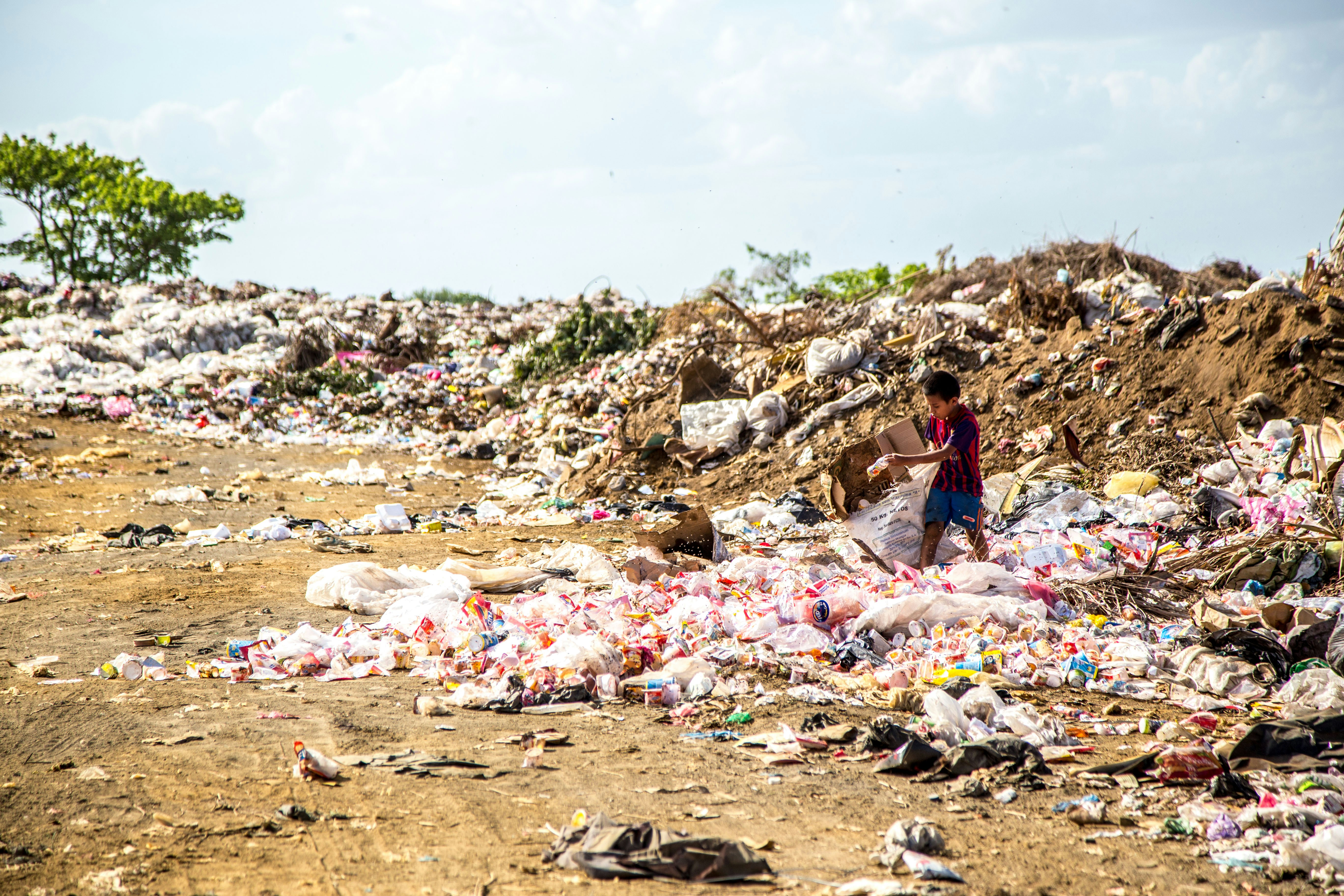
Photo by Hermes Rivera on Unsplash
Fast fashion is the new age way to shopping. Your favourite brands, Shien, Primark, H&M give you thousands of options for new clothes every week, low prices, and a way to always stay up to date with the constantly evolving trend cycles. At face value, it seems like the perfect way to shop – one click and that £4 dress is on its way into your hands. But upon a deeper inspection, there is a darker truth laying behind the façade of the flashy websites and the viral clothing haul. From landfills overflowing with discarded polyester clothing, to water sources ‘drying up’ and rivers and streams ‘polluted’[1] to microplastics filling the oceans, there is irrefutable evidence to suggest that the impact of fast fashion on our planet is devastating and our patterns of over-consumption and apathy to the effects of it will eventually lead to complete ecological destruction. The problem of climate change, according to sociologist John Urray[2], is ‘not simply technical but deeply social’. He argues that our ‘everyday normalities’, like ‘mobility, consumption and provision’ are ‘central to the production of greenhouse gasses’ and these systems are ‘locked in’, meaning any substantial change to the model of fast fashion must be systematic. He emphasises how the problem does not lie with the individual consumer, but rather with the ‘system’ of capitalism, production and global supply chains.
Perhaps the most familiar example of how fast fashion is a driving force to climate change is the hyper-consumption it encourages and nurtures. Have you’ve ever opened up TikTok to come across a ‘£500 Shein haul’ and wondered what happens to this mountain of micro-trends once the video is over and the clothes are no longer ‘cool’? The very nature and goals of every brand in the fast fashion industry lies in profit-maximisation, and in this digital age producers have more power than ever before in how they can push people to buy more. Shortened trend cycles influenced by the fast-paced nature of social media leads people to buy more clothes, wear them for a shorter amount of time, and then discard them once the trend is over. This is a business model meant to create overconsumption – the priority is quantity over durability or quality. This furthers John Urrays point that it is the system of capitalism, designed to maximise profit, no matter the sociological cost, that is the catalyst of climate change. The illusion of choice, illustrated by Bauman’s argument that ‘consumption shapes identity’, furthers this connection between the micro-level argument of the individual, and the macro-level argument of the capitalist structures that enforce our behaviour. Fast fashion gives us the illusion of endless choice, keeping the system of overconsumption a huge part of our everyday lives as we ‘shop for our identities’[3] in a desperate attempt to keep up with trends and create the self-expression we crave, despite the damage it causes.
The problem of overconsumption mainly lies on the consumer and marketing side of the industry, however when you look at the actual production and transport of fast fashion, there is massive carbon footprint hidden directly under the surface. The industry gives out a huge emission of greenhouse gasses, accounting for up to 10% of all global emissions[4] as well as enormous water use with about ‘700 gallons of water being used to produce one cotton t-shirt’ and ‘2000 gallons of water to produce a pair of jeans’[5]. As well as this, textile dying is ‘the world’s second largest polluter of water’[6] as leftover wate from the textile industry is often dumped illegally into water sources. This is particularly a problem in the third-world countries that many fast-fashion factories are in as it creates water scarcity for the people living in these countries, as well as a broken ecosystem, with the dye poisoning any chance of life in these areas. This brings us back to John Urrys narrative of it not being individual behaviour alone, but rather a system designed to profit maximise at the cost of the depletion of our natural resources that leads to climate change.
Ultimately, fast fashion is a key part of how capitalism and ‘the system’ exploits our planet and us for profit. Structural change both in the way we produce our clothes, and the way we overconsume them is entirely necessary in order to slow the rate of climate change and prevent the fashion industry’s race for profit from destroying our planet.
References
[1] The Environmental Impact of Fast Fashion Explained, Rashmila Maiti, Earth.org, 2025
[2] The Sociological Review, John Urray, 2009
[3] Zygmunt Bauman
[4] The Carbon Footprint of Fast fashion Consumption and Mitigation Strategies, Science Direct, Zhikun Li, 2024
[5] The Environmental Impact of Fast Fashion Explained, Rashmila Maiti, Earth.org, 2025
[6] Business insider, 2019
Contact us
+44 (0) 161 306 6000


0 Comments