
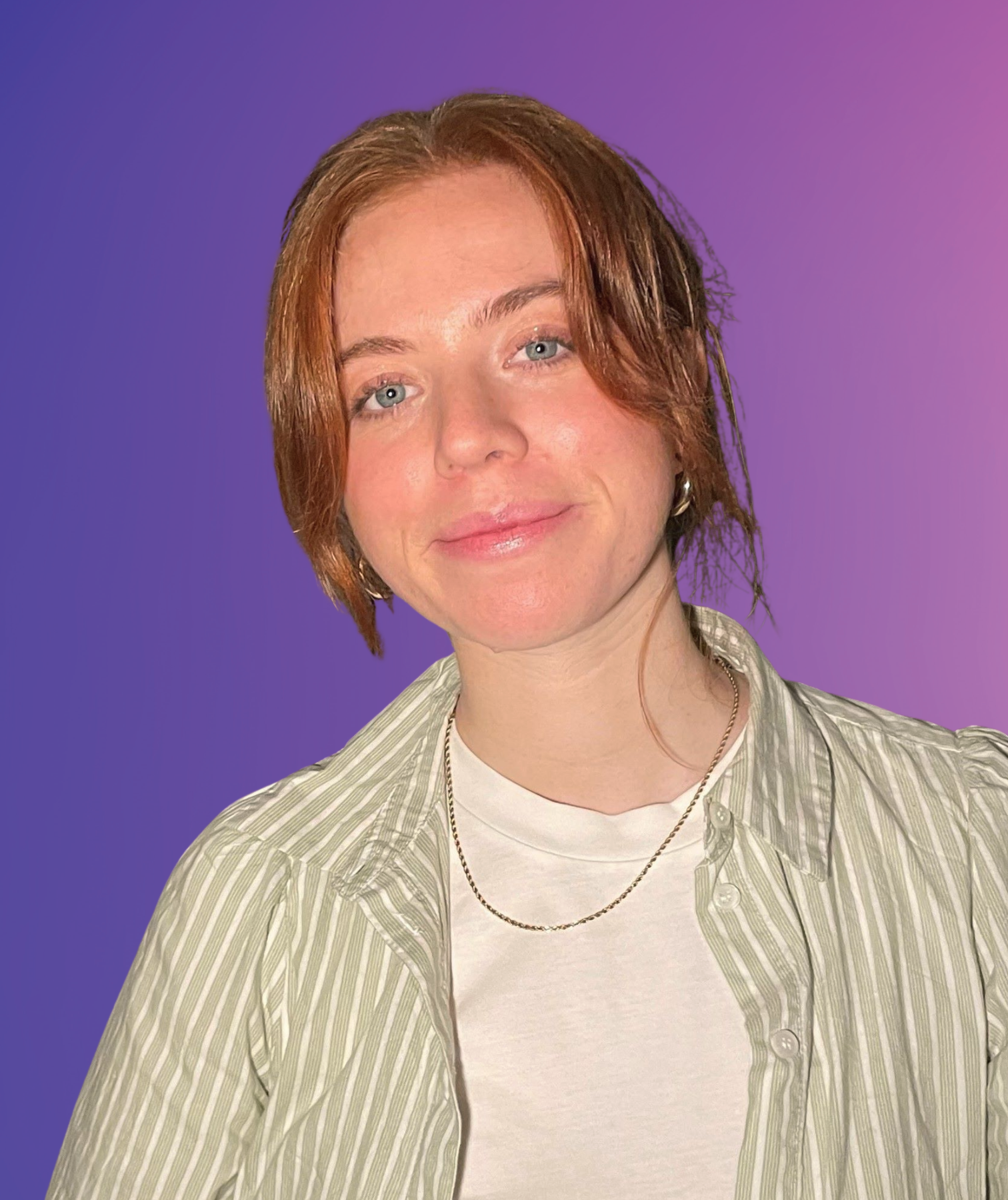
Megan’s PhD exploring policy and criminology in Greater Manchester
Megan Hadfield, PhD Criminology, shares her insights on the journey to PhD study, the nature of her research and the balance between research study and social life.
I thought after my master’s I was done with academia – I started a job and after a year or so I missed researching and having autonomy over what I was learning.
Where were you before starting your PhD, did the PhD follow on from your master’s study?
I completed by bachelor’s in Modern Languages at The University of Sheffield and my MA Criminology at The University of Manchester. I thought after my master’s I was done with academia. My master’s was amazing and set me up with so many skills, then I started a job and after a year or so I missed researching and having autonomy over what I was learning. My PhD research is a lead on from my MA dissertation.
What was the motivation for staying with The University of Manchester for your PhD?
I think my supervisor Rose Broad (Prof Rosemary Broad) was the motivation behind choosing Manchester. I didn’t really consider anywhere else, Rose had emailed me about something else and I had mentioned I wanted to leave the role I was in. She mentioned a PhD, and we had a long conversation and I decided to go for it. Knowing I had Rose supporting me and that she would build my supervisory team around her experience was what made me sure I chose well.
Can you provide an overview of your project and research, highlighting the key themes and objectives of your work?
My research is looking at the interrelationship between immigration policy, destitution, and exploitation, within Greater Manchester. My research questions are currently moving parts, and as I conduct more interviews they shift even more (which is all part of the PhD process). I guess my main aim for this research is to platform voices of lived experience of these various systems; to spend time hearing their stories, and utilising these stories to contribute meaningfully and tangibly to policy, whether that be locally or regionally.
This research stems from my years of volunteering at a homeless charity in central Manchester. I started in 2019, and just noticed the stark disparities between UK and non-UK nationals accessing support. My MA dissertation was the beginning of this journey, speaking to professionals, and since then policies have become worse, more restricting, and dangerous, so I am really glad I have been able to engage with those with lived experience. In short my research comes from a feeling of helplessness which I think we all experience, and a desire to do something, in a capacity that suits my capabilities.
I wouldn’t say my research is separate from other academic disciplines, I keep saying throughout my research that talking about immigration, destitution, or exploitation through a purely criminological lens would be unwise. I think that the angle in which I am looking at this is different, I have my own theoretical perspectives which I am applying to the area, drawing on works from outside of Criminology also. Mainly, I think the experience I bring with me from my work in the NGO sector has allowed me to redress this issue, opening up the discussion to new ideas.
What have been the highlights of the PhD experience so far?
- My 3 month placement at the GMCA working on anti-exploitation activity across Greater Manchester
- Presenting at 2 academic conferences in Europe
- My friends that I have made along the way, something special about PhD friends, they are nerds like you, they want to talk about the world, its issues and solutions, but they also want to be silly and go out. It’s a nice balance I have found.
- Speaking to people about their lives, them trusting me with their stories.
- I was recently on BBC Radio 2 on the Jeremy Vine show, very briefly, to myth bust around discussions on immigration and homelessness in the UK – pulling in my PhD knowledge and what we are saying on the ground of the charity I volunteer at. Tp me, that is my research having an impact, debunking fallacies and rhetoric which are dangerous.
I would say that the PhD has actually exceeded my expectations. People have said it is an isolating path, and whilst it can be at times, there are always people around you who can make it less lonely. Yes your topic is your topic, it is a niche and for that reason only you can finish it, but you don’t have to do it alone. Go onto Campus, if you have an office use it, find spaces and writing workshops, retreats, etc. to help yourself out.
What have been the main challenges?
I was diagnosed with ADHD at the beginning of my PhD. It has been something I have thought about for a while, but the individual motivation and setting your own work and routine was a catalyst to realising I need some extra support. Whilst it has been a big challenge, and learning to work with my ADHD and not against it has taken some getting used to, it has been a great learning experience.
What have you learnt about yourself by undertaking a PhD?
I have learnt a lot. Some of it more practical like ways of working and presenting research to audiences, others more personal, such as how my brain works and how to cater to it, how to talk to different groups of people, actively listen and learn. I think I have built on my confidence, learning that perseverance and saying yes to opportunities really does pay off in the end. I have learnt that I can take self-imposed breaks and take time off, and do a better job when I get back. I am learning to set boundaries and know my limits. It has taught me to ask for things, and not be afraid to put myself out there. I have discovered that my passion lies in creating projects, developing strategies, and contributing to policies – I think I like to see impact.
How do you balance your time with research and other commitments?
It has taken a lot of hard work to get to a point where I feel like I am balanced, and some weeks I am not quite getting it. I think the main thing is learning to say ‘no’. I have been known to say, ‘say yes’, as you don’t know when your next opportunity will present itself, but I think there has to be balance. My typical week looks at lot like, mornings are dedicated to admin, whether that is emails, life admin, walking my puppy, catching up on things I have not had the chance to. Followed by afternoons to late evenings on PhD work, writing, transcribing, reading, etc.
It does not always follow this pattern, but I have learnt that I am a night worker, and therefore I have tried to amend my schedule to accommodate for this. I have a lot of non-university commitments, I have tried to whittle them down this past year, but I am on the board of trustees at a charity, I am helping to run a volunteer translators programme at the university and the charity at which I volunteer, and I am also a teaching assistant.
Safe to say a lot going on, and the main way I have found balance is by prioritising my PhD and then what makes me happy. What gives me a sense of joy, alongside my academic career? And can I do them in a way that ensures I am giving my best to my PhD? I often reflect on this some months I am happy with the balance, others it needs tweaking. that’s okay.
What are your intentions for when you finish PhD study?
Firstly, to take a long break and reflect on an impressive feat. I hope to continue the momentum that has started to develop in Manchester around anti-exploitation work, and contribute to it in more ways. I hope my research can produce a variety of outcomes and outputs, that can be shared across multiple spaces. I would like to continue platforming voices of lived experience, challenging harmful rhetoric in ways that I can, and continue volunteering, as this for me has been one of the greatest things I have done.
Contact Us
+44 (0) 161 306 6000


0 Comments