
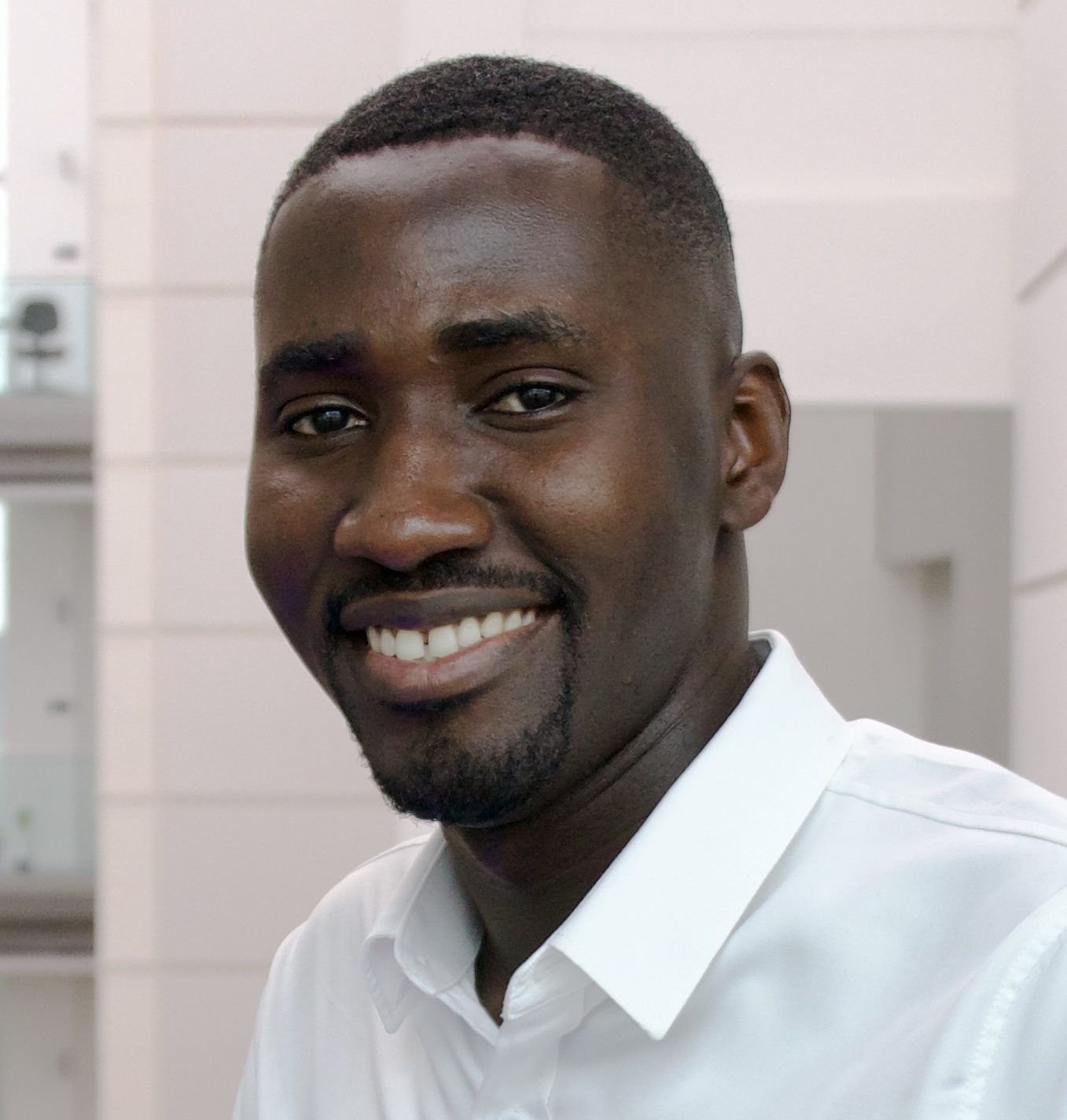
Profile: Charles Gyasi
Charles Gyasi is a PhD student from our Wellcome Trust Immunomatrix in Complex Disease PhD Programme based in the Grencis Lab. Hailing from Ghana, read all about Charles’s exciting research journey, starting with early work on malaria and neglected tropical diseases at the Kwame Nkrumah University of Science and Technology in Ghana, then studying lymphatic filariasis at the University of Bonn in Germany, and now exploring how our body’s circadian rhythms influence immune responses and gut health as a PhD student at the Lydia Becker Institute here in Manchester.
Please introduce yourself and tell us what inspired you to pursue a PhD here at the Becker?
I’m originally from Ghana, where my passion for science began with a simple curiosity: how does the immune system protect us, and what happens when it goes wrong? While I once dreamt of becoming a medical doctor, I later realised that my true calling was to explore these big questions through research.
That journey began during my undergraduate studies at the Kwame Nkrumah University of Science and Technology (KNUST), where I investigated how blood protein levels could help predict illness severity in malaria patients. It was my first real taste of scientific discovery, and I was hooked. I later pursued a master’s degree in clinical microbiology at the same university, supported by the Kumasi Centre for Collaborative Research in Tropical Medicine (KCCR). There, I joined a team focused on neglected tropical diseases. Under the mentorship of Professor Alexander Debrah and Dr (Mrs) Linda Debrah, I contributed to a clinical trial that demonstrated how an alternative treatment (e.g., doxycycline) could slow the progression of lymphatic filariasis-associated lymphedema, a painful and disabling condition caused by parasitic infection. It was also during this time that I developed a strong foundation in multidisciplinary research, scientific writing, and research integrity.
Later, I was awarded an ERASMUS+ scholarship to study at the University of Bonn in Germany. There, I focused on patients suffering from multiple health conditions linked to long-term lymphatic filariasis lymphedema. That experience opened my eyes to the global nature of health challenges and the power of international collaboration. It also led me to the Becker Institute, where I found a research programme that perfectly matched my growing interest in how timing, inflammation, and the immune system are all connected.
Doing a PhD here is not just an academic step, it’s the fulfilment of a vision I’ve carried with me from Ghana: to use science as a tool for impact. I’m excited to be part of a research community where collaboration, curiosity, and purpose come together to tackle some of the world’s most complex health problems.
Can you tell us about the research you’re working on at the moment?
My research explores how the body’s internal clock, our circadian rhythm, regulates immune responses and gut health. I focus on the gene Tsc22d3, which encodes the glucocorticoid-induced leucine zipper (GILZ) protein. This protein plays a pivotal role in cellular processes such as growth, survival, and stress response, particularly during inflammation. Using a Trichuris muris helminth infection model, I investigate how GILZ expression in immune and intestinal epithelial cells influences type 2 immune responses and mucin production, the protective substances lining the gut. A key objective of my project is to understand how GILZ is controlled by the circadian clock and how this temporal regulation impacts intestinal homeostasis.
By bridging circadian biology, immunology, and mucosal health, my research will provide novel mechanisms that could inform therapeutic strategies for chronic inflammatory and intestinal diseases.
What are your career goals?
My long-term goal is to be a shoulder for the rising of many, uplifting the next generation of researchers and global health advocates, especially those from underrepresented backgrounds. I want my journey to serve as a platform that empowers others to rise, lead, and innovate.
Grounded in my current research at the intersection of immunology, circadian biology, and the extracellular matrix in infectious disease, I focus on how immune responses are shaped by molecular timing and environmental cues. I am particularly driven to address diseases that disproportionately affect low- and middle-income countries and to ensure that scientific discoveries lead to real-world health solutions.
To build on this foundation, I plan to pursue a competitive postdoctoral fellowship, establish my own lab, and lead collaborative research linking the Global North and South. I am committed to mentoring African scientists and contributing to policies that promote equity and access in global research.
Ultimately, I want my career to create impact, expand opportunities, and provide a pathway for others to rise just as I have.
What advice would you give to someone who’s daunted by the idea of pursuing a PhD?
First, I would say: it’s normal to feel daunted. A PhD isn’t just a degree; it’s a journey of growth, uncertainty, and self-discovery. But it’s also one of the most rewarding paths you can take if you’re genuinely curious.
Coming from Ghana, I once saw a PhD as something distant and almost unreachable. But I’ve learned that what matters most isn’t where you start. It’s your willingness to learn, adapt, and stay focused on your “why.” For me, that “why” has always been the desire to use science to improve lives, especially in under-resourced communities. If you’re thinking about a PhD, surround yourself with mentors, ask bold questions, and don’t be afraid to take the first step, even if you don’t feel fully ready. Growth happens in discomfort, and the journey will teach you just as much about yourself as it does about your research.
Lastly, remember that you don’t have to do it alone. Science is a team sport, and there are communities, both local and global, that are ready to support you. Believe in your potential, start small, but don’t end small.
What’s your favourite thing about being part of the immunology community at Manchester?
What I value most is the supportive environment that encourages learning through failure. In my first year, many of my experiments didn’t go as planned. Instead of feeling isolated, I had a team around me who encouraged me, helped me troubleshoot, and guided me toward better approaches. That culture of support made a huge difference in how I grew as a researcher.
Another standout aspect is the collaborative spirit among the principal investigators and research teams. You’re never working in isolation. There are groups using similar techniques and facing similar challenges, which creates opportunities to share knowledge, skills, and resources. It makes the research journey feel less like a solo mission and more like an adventure shared with others.
Being part of this community has not only strengthened my science but also reminded me that progress in research often comes through collective effort and open dialogue.
And finally, what do you like to do in your spare time?
I deeply value quality time with family and friends. They have been a constant source of strength throughout my journey. Whether it’s sharing a meal, having meaningful conversations, or simply unwinding together, those moments keep me grounded and offer perspective beyond the lab. I also appreciate quiet reflection and personal growth, often through reading, prayer as a Christian, or listening to music. These simple yet meaningful habits help me recharge, stay centred on my purpose, and show up fully in both life and research.
Follow Charles on Bluesky: @cgyasi.bsky.social
Photo: Brian Chan




0 Comments