
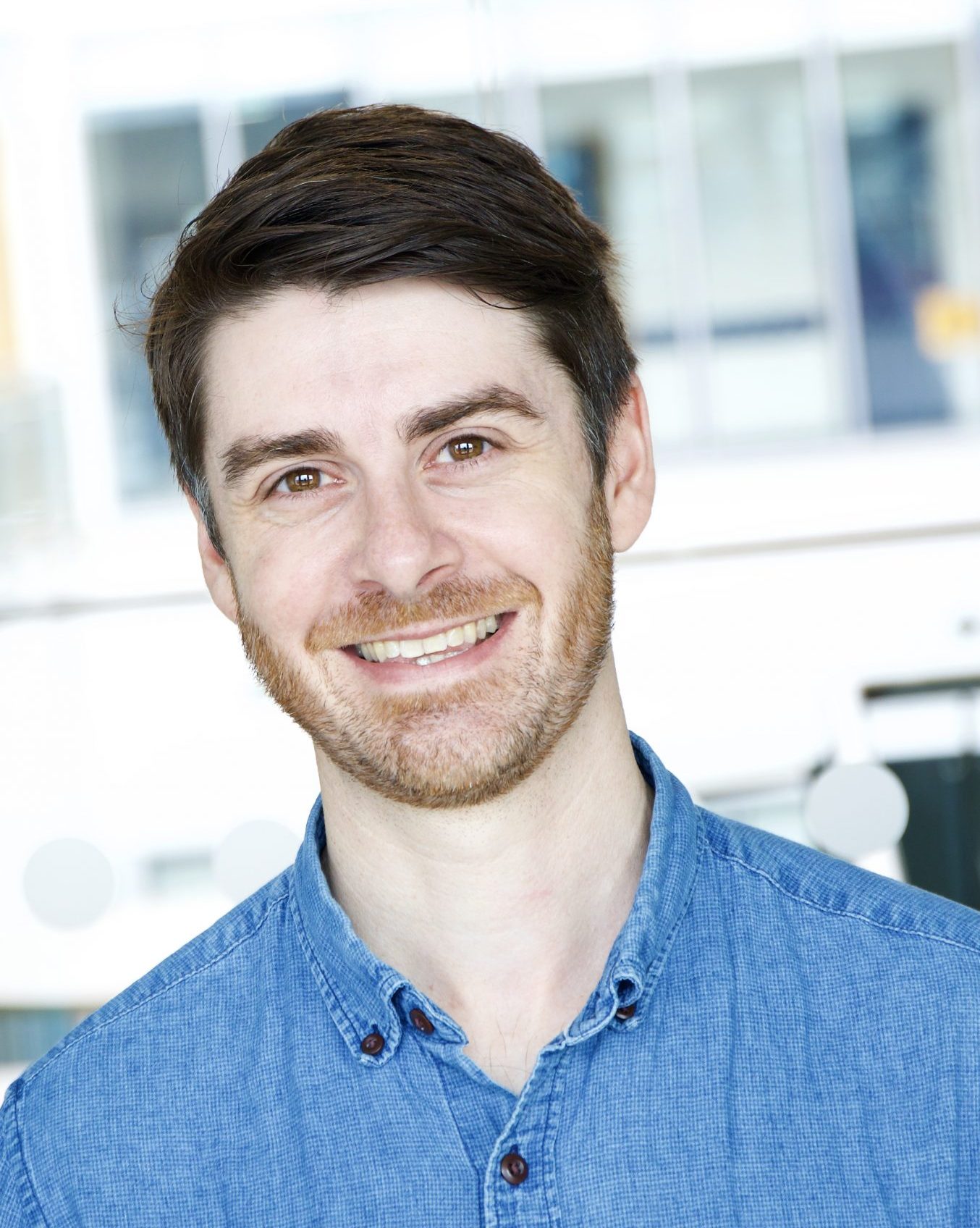
Profile: Dr Nicholas Scott
Dr Nicholas Scott is an Experimental Officer originally hailing from Melbourne, Australia, and now based at the Lydia Becker Institute here in Manchester. His research journey has taken him from type 1 diabetes studies in Melbourne and Birmingham to COVID-19 immune profiling and, most recently, to co-founding an exciting new immunoprofiling facility at the Becker called the Human Immunology Accelerator. Read on to find out more….
Please introduce yourself and tell us about your background in research.
I’m from Melbourne, Australia, which is also where I did my BSc and PhD (University of Melbourne). In between, I did some travelling and got a UK working holiday visa, working as a technician in Prof Lucy Walker’s lab at the University of Birmingham on type 1 diabetes (T1D). I continued to work on T1D during my PhD back in Melbourne at St Vincent’s Institute of Medical Research, under Prof Helen Thomas and Prof Stuart Mannering, investigating the repurposing of JAK inhibitors to treat T cell autoreactivity in mouse models and human cells. Stuart’s lab was the first in the world to isolate autoreactive T cell clones from human pancreatic islets and finely map their peptide epitopes (most to C-peptide of insulin). Helen’s work on cytokine suppression led to the BANDIT phase 2 clinical trial testing a JAK inhibitor in new onset T1D to preserve beta cell function. Helen tragically passed away last year, and I would like to highlight the outstanding scientist and person she was to all.
I loved the experience of living in the UK and being near Europe, so I took up a postdoc within the Becker. Fascinated by immune regulation, I moved from T1D to something out of my comfort zone: macrophage-driven tolerance to the gut microbiota with Dr Elizabeth Mann, who was establishing her lab in Manchester at the time. When the COVID-19 pandemic interrupted my regular work, I was one of many who volunteered to profile the immune systems of hospitalised patients. This large collaboration with the Greater Manchester hospitals led to important early findings that highlighted what was happening in acute and long COVID disease. I focused on monocytes and was able to determine unique immune signatures that stratified the key long COVID symptoms of fatigue and lung injury.
Can you tell us about the research you’re currently involved in?
In mid-2023, using funding from the NIHR Manchester Biomedical Research Centre, Prof Tracy Hussell, Dr John Grainger, and I founded an immunoprofiling facility within the Becker called the Human Immunology Accelerator (HIA). The goal of the HIA is to dramatically improve the reliability and standardisation of immune characterisation in clinical cohorts across the Greater Manchester area.
We want to be the go-to for clinicians and industry for measuring immune responses in patients reproducibly. We are making use of next-generation spectral flow cytometry and new multiplex ELISA systems to do this, which both dramatically reduce day-to-day variance compared to older technology.
An important component of the Accelerator is the blood processing biobank. To reduce confounding variables in the immune profile, blood cells must be isolated and stored using the same protocol. Samples can be couriered to us on any weekday, and immune cell populations can be purified and stored for later analysis. In combination with traditional PBMC isolation, we use whole blood stabilisers, which allow preservation of all immune cell lineages, requiring far less blood volume and processing time. The challenge is getting these stabilised blood samples working with our assays, which we have been investing a lot of time in and making good progress. There are significant cost savings from using these stabilisers, and I envision this will eventually become the norm for routine blood profiling. Our goal is to have spectral flow cytometry panels for all major lineages, allowing characterisation of any immune cell population at high resolution.
What do you find most rewarding/challenging about your role?
The greatest challenge has been juggling the varied responsibilities in my role. I am involved in everything from overseeing our immune assay development to dealing with MTA/collaboration agreements, study logistics, and forming new collaborations and writing grants.
The most rewarding is working with clinicians from diverse specialities and making use of my immunology knowledge to advise and profile a broad range of conditions. At present, we have 19 collaborations formed, encompassing everything from neurological conditions to mental health to traditional autoimmune and inflammatory diseases. I never dreamed we would have so many varied cohorts so quickly!
What’s your favourite thing about being part of the immunology community at Manchester?
The fact that it is very large and diverse in terms of expertise- there is someone you will be able to talk to, collaborate with, or they will know someone in their network to refer you to. Even outside immunology, there are many colleagues that work on overlapping areas of inflammation.
And finally, what do you like to do in your spare time?
I have always had a keen interest in sport (both playing and following!) and the outdoors. That has changed more recently now I am a Dad! These days, my spare time is taken up looking after and playing with my almost 1-year-old son.
I have a real fascination with history and will read or watch practically anything on the topic– I think it’s very important to understand where we come from and how things were in the past.
Read Dr Nicholas Scott and Dr Elizabeth Mann’s ‘Study in Focus’ piece – “How the immune system contributes to Long Covid”.
Photo: Brian Chan




0 Comments