
Stroke’s Reach Beyond the Brain: New Study Reveals Impact on the Gut Immune System and Microbiome
Stroke is a potentially fatal neurological event that is increasingly prevalent across the globe. While rapid clinical interventions are urgently needed to reduce acute mortality, stroke survivors also suffer from a wide range of secondary and long-lasting health issues, such as respiratory and urinary tract infections. In addition, many stroke survivors experience gastrointestinal complications, such as constipation or incontinence – demonstrating the effects of stroke throughout the body.
Intriguingly, emerging evidence suggests stroke also alters the composition of the intestinal microbiota – the community of “good bacteria” that normally promotes gut health. The reasons for this have been unclear, but changes in gut bacteria have been associated with stroke outcome and severity, highlighting a potential role for the “gut-brain axis” – a poorly understood link that sends information between the brain and intestine.
One key way in which the body manages its gut microbiota is through the intestinal immune system, and increasing evidence demonstrates these immune cells can be affected by neuronal signals sent from the brain. In a new study Madeleine Hurry in the Hepworth lab at the Lydia Becker Institute of Immunology and Inflammation set out to investigate whether stroke alters those gut immune cells and their interactions with gut bacteria.
“Working with our neuroscientist colleagues, we were able to shed light on the interplay between the brain and the gut’s immune system and microbes. Our hope is this might open up new avenues to help treat chronic complications in stroke survivors.”
Using an animal model of stroke in collaboration with Cath Lawerence, Dave Brough and Stuart Allan from the Geoffrey Jefferson Brain Research Centre, and reported in Brain, Behaviour and Immunity, the team discovered changes in the intestinal immune system – in particular a specialised form of antibody called Immunoglobulin A (IgA). IgA is released mainly into the intestine, where it physically binds to commensal bacteria to influence whether they can live and grow in the gut. The investigators found that IgA levels are changed following stroke, which act to change the types of microbes within the gut. Surprisingly, they also found effects in the meninges – membranes that line the brain that house immune cells that help to protect the brain from infections and damage.

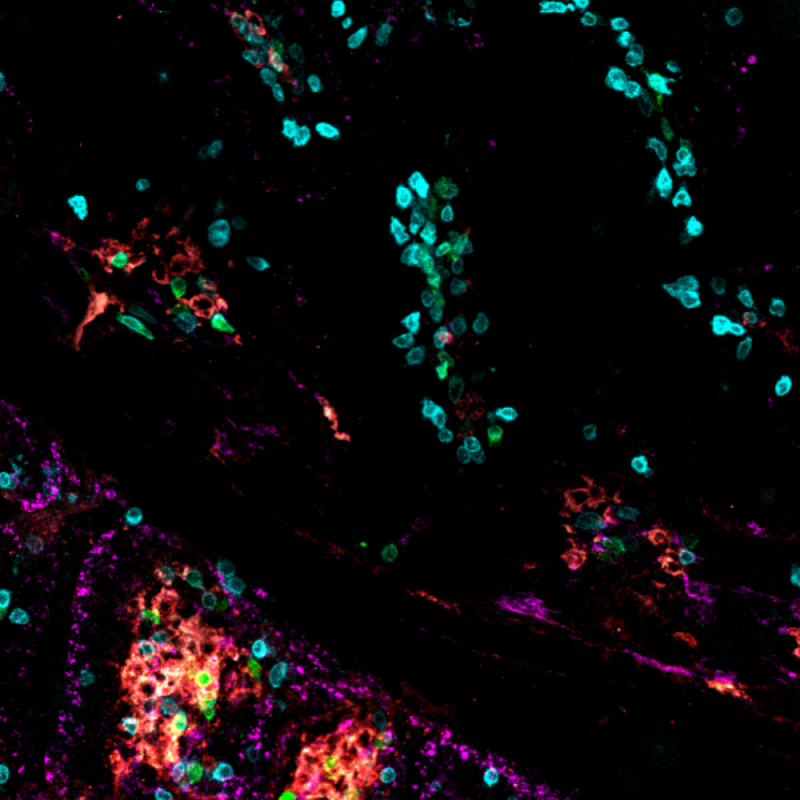
Image shows immune cells within the gut of a mouse, identified by fluorescence microscopy. Immunoglobulin A (red), T cells (blue), innate lymphoid cells (green) and MHCII (pink). Credit: David Posner and Siyu Ji.
Lead investigator Professor Matt Hepworth commented, “Scientists are increasingly understanding that organs and systems within the body are closely connected. Stroke patients often suffer from problems with their intestinal tract, but the reasons for this haven’t always been clear. Working with our neuroscientist colleagues we were able to shed light on the interplay between the brain and the gut’s immune system and microbes. Our hope is this might open up new avenues to help treat chronic complications in stroke survivors.”
- Cerebral ischaemic stroke results in altered mucosal IgA responses and host-commensal microbiota interactions, published in Brain, Behaviour & Immunity (2025). DOI: 1016/j.bbi.2025.106184




0 Comments